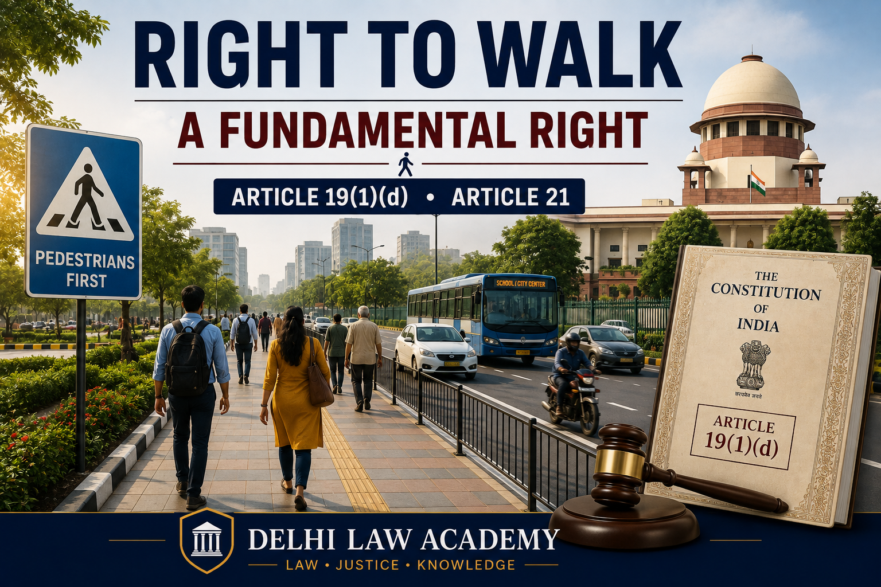
Right to Walk as a Fundamental Right: Supreme Court’s 2026 Judgment Explained Walking is one of the simplest forms of human movement. Yet for millions of pedestrians, walking on Indian roads can involve significant risks because of inadequate footpaths, encroachment, lack of pedestrian crossings and the dominance of motorised traffic. In an important constitutional judgment, the Supreme Court has now …
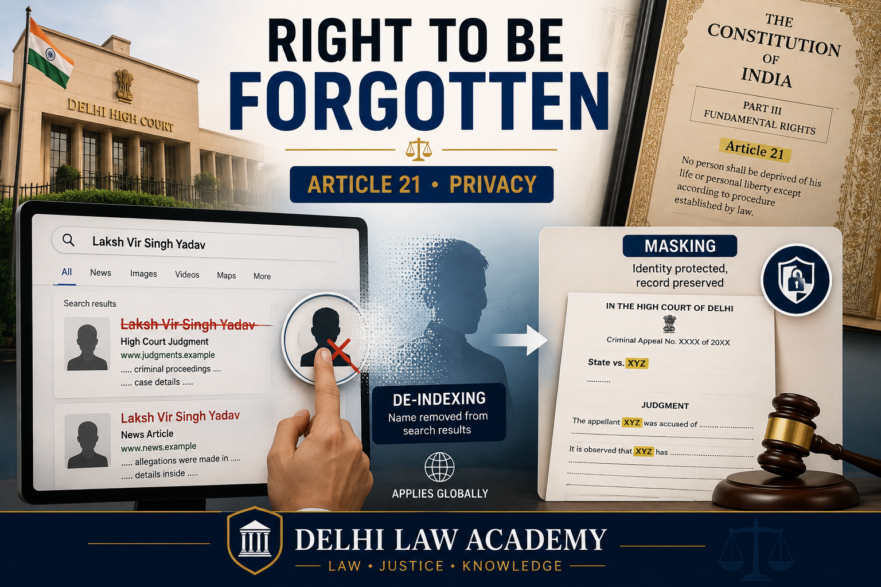
Right to Be Forgotten Under Article 21
Right to Be Forgotten Under Article 21: Delhi High Court’s 2026 Judgment Explained The internet has transformed the way information is created, stored and accessed. A court case that ended years ago may continue to appear whenever a person’s name is searched online. Even where an accused has subsequently been acquitted or discharged, the digital record of the original proceedings …
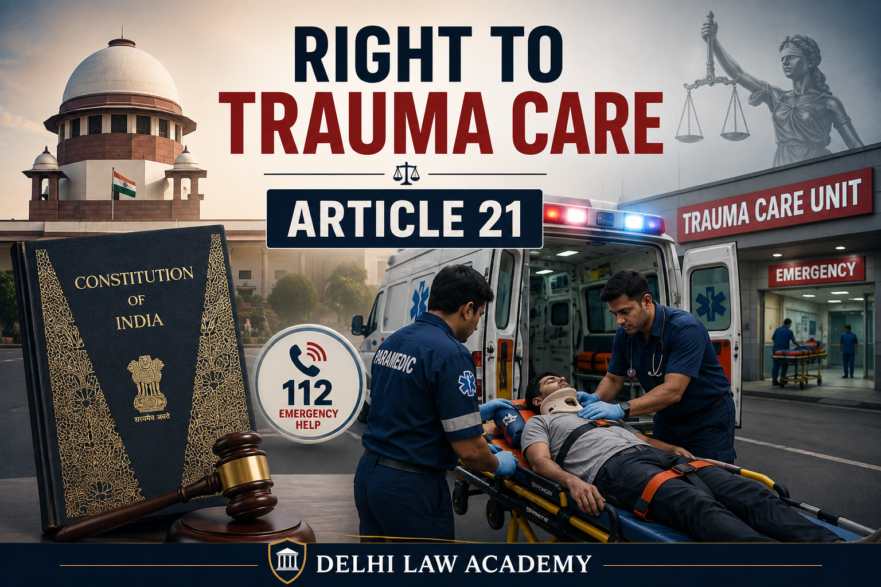
Right to Trauma Care Under Article 21
Right to Trauma Care Under Article 21: Supreme Court’s 2026 Savelife Foundation Judgment The right to life under Article 21 of the Constitution is not limited to protection from unlawful deprivation of life. Through decades of judicial interpretation, the Supreme Court has expanded Article 21 to encompass conditions necessary for a dignified and meaningful life. In an important recent development, …
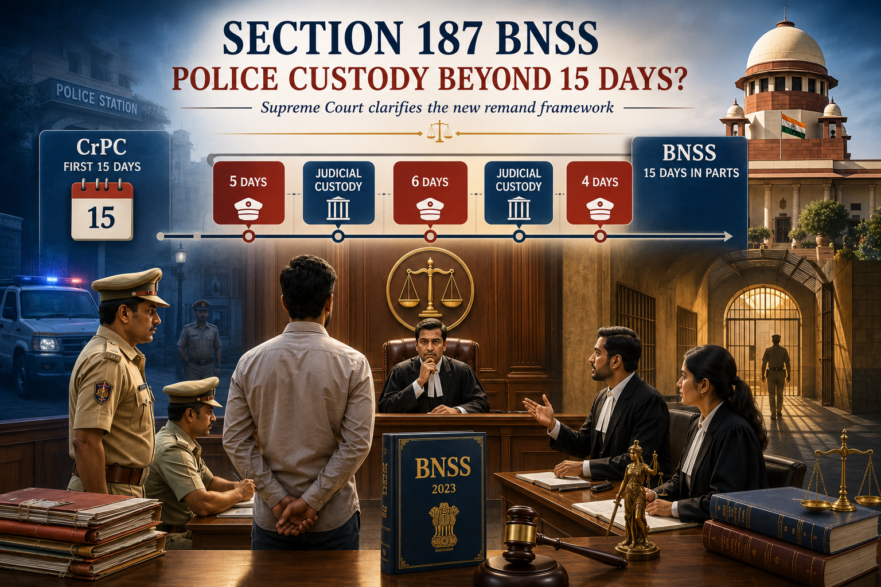
Section 187 BNSS: Police Custody Beyond 15 Days
Section 187 BNSS: Police Custody Beyond 15 Days & Supreme Court’s 2026 Judgment The Bharatiya Nagarik Suraksha Sanhita, 2023 (BNSS) introduced an important change in the law relating to police custody and remand. Unlike the position under Section 167 of the Code of Criminal Procedure, 1973 (CrPC), Section 187 BNSS permits the maximum 15 days of police custody to be …
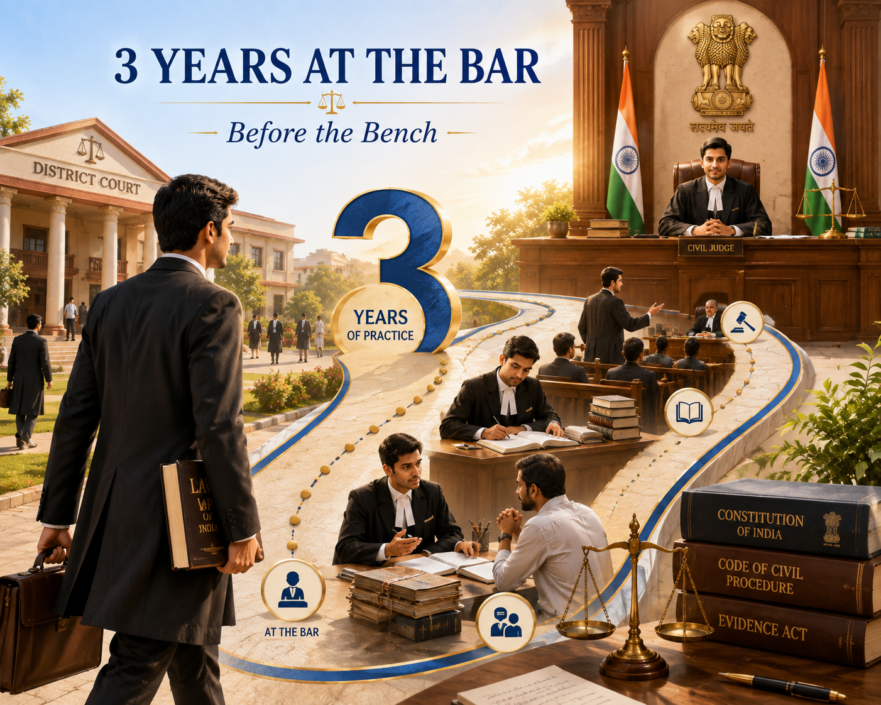
3-Year Bar Practice Mandatory for Civil Judge Exam:
3-Year Bar Practice Mandatory for Civil Judge Exam: Supreme Court Judgment & Latest Developments The Supreme Court’s decision to restore a minimum three years of legal practice as an eligibility requirement for recruitment to the post of Civil Judge (Junior Division) has significantly changed the pathway to entry-level judicial services in India. The judgment seeks to ensure that candidates entering …
Visually Impaired Candidates in Judicial Services
Inclusion of Persons with Disabilities in Judicial Services: Supreme Court’s Landmark Judgment The inclusion of Persons with Disabilities (PwD) in judicial services is an important aspect of equality, non-discrimination and access to justice. In a landmark judgment delivered on 3 March 2025, the Supreme Court of India held that visually impaired candidates cannot be treated as unsuitable for judicial service …
Panchayat Advancement Index (PAI)
Panchayat Advancement Index (PAI): Measuring the Performance of Gram Panchayats The Panchayat Advancement Index (PAI) is an important governance initiative of the Government of India aimed at strengthening grassroots democracy through evidence-based planning and performance assessment. By measuring the development outcomes achieved by Gram Panchayats across various sectors, the Index encourages better governance, accountability, and sustainable rural development. Why in …
Police Use of Force During Protests in India
Police Use of Force During Protests in India: Constitutional Limits & Supreme Court Guidelines Peaceful protests are one of the strongest expressions of democracy. The Constitution of India guarantees citizens the right to express their opinions, assemble peacefully, and voice dissent against government policies. At the same time, the State has a constitutional duty to maintain public order, protect life …
Public Interest Litigation (PIL) in India
Public Interest Litigation (PIL) in India: Constitutional Foundation & Recent Supreme Court Developments Public Interest Litigation (PIL) is one of the most significant judicial innovations in India. It transformed the traditional justice delivery system by allowing public-spirited individuals and organizations to approach constitutional courts on behalf of disadvantaged sections of society or for issues affecting the larger public interest. Over …
Harish Rana v. Union of India (2026)
Harish Rana v. Union of India (2026): India’s First Court-Approved Passive Euthanasia Case The Supreme Court’s judgment in Harish Rana v. Union of India (2026) marks a historic milestone in India’s constitutional and medical jurisprudence. For the first time, the Supreme Court permitted the withdrawal of life-sustaining treatment in an individual case by applying the legal framework laid down in …