
Right to Walk as a Fundamental Right: Supreme Court's 2026 Judgment Explained
Walking is one of the simplest forms of human movement. Yet for millions of pedestrians, walking on Indian roads can involve significant risks because of inadequate footpaths, encroachment, lack of pedestrian crossings and the dominance of motorised traffic.
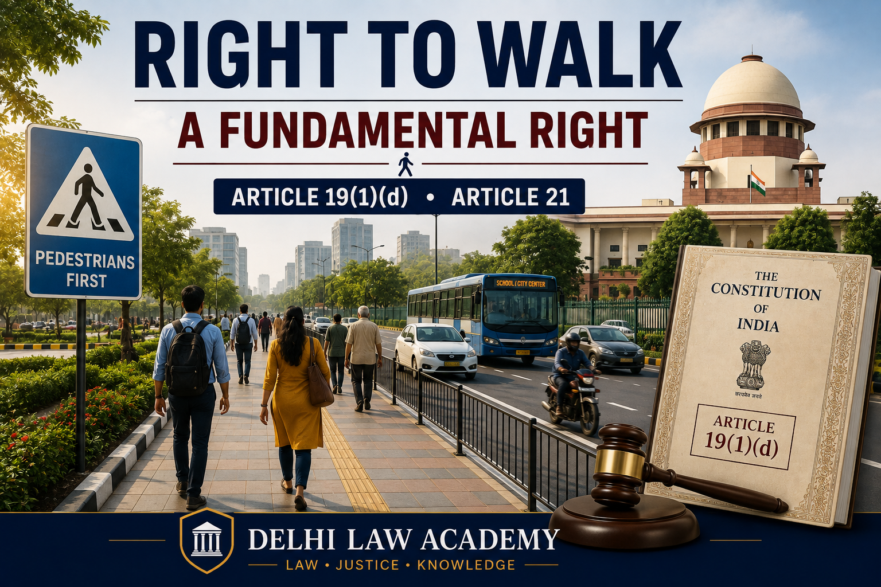
In an important constitutional judgment, the Supreme Court has now expressly recognised the right to walk on demarcated footpaths as a Fundamental Right and held that this right has priority over the movement of motorised vehicles.
Why in News?
On 19 June 2026, the Supreme Court delivered its judgment in Maniyar Iliyaz @ Shaik Riyaz & Anr. v. P. Ayyappan & Ors., Civil Appeal Nos. 4665–4666 of 2025.
The Bench comprising Justice Pamidighantam Sri Narasimha and Justice Atul S. Chandurkar held that the right to walk is a Fundamental Right under Part III of the Constitution.
The Court further held that this right includes the right to walk on safe and demarcated footpaths, and that such pedestrian rights have priority over movement by motorised vehicles. :contentReference[oaicite:2]{index=2}
The Case: Maniyar Iliyaz @ Shaik Riyaz v. P. Ayyappan
The case arose from a tragic road accident involving a father and his five-year-old son. While the father and child were walking towards the child's school, a tanker approached from behind and struck the child.
The Court noted a crucial fact: there was neither a footpath nor a pedestrian crossing at the location.
The tragedy led the Supreme Court to examine an issue that went beyond the individual claim for compensation: whether the Constitution itself protects a person's ability to walk safely on public roads.
The Court concluded that it does.
RJS Exam Point
Right to Walk = Fundamental Right under Part III
It is integral to Article 19(1)(d), read with Articles 19(1)(a), 19(1)(b), 19(1)(c) and 21.
What Did the Supreme Court Hold?
The Court made a clear constitutional declaration:
The right to walk is a Fundamental Right under Part III of the Constitution.
It includes the right to walk on demarcated footpaths.
The Court held that the right is integral to the right to movement guaranteed under Article 19(1)(d), read with Articles 19(1)(a), 19(1)(b), 19(1)(c) and Article 21.
Importantly, the Court stated that the fundamental right to walk on demarcated footpaths is primary and has priority over movement by motorised vehicles. :contentReference[oaicite:3]{index=3}
Article 19(1)(d): The Constitutional Basis of the Right to Walk
Article 19(1)(d) guarantees to every citizen the freedom to move freely throughout the territory of India.
Traditionally, the expression "freedom of movement" may be understood as the freedom to travel from one place to another. The Supreme Court's judgment gives this provision a more fundamental dimension by emphasising that walking itself is an essential form of movement.
The Court observed that the constitutional right to movement should not be understood only in terms of movement on wheels.
Walking predates motor vehicles and is the most basic form of physical movement. Therefore, the constitutional freedom of movement necessarily protects the ability of citizens to walk.
Why Are Footpaths a Fundamental Right?
The Court did not stop at recognising a general right to walk. It specifically brought demarcated footpaths within the scope of the Fundamental Right.
A footpath provides pedestrians with a designated space separated from motorised traffic. Without such infrastructure, pedestrians may be forced to share road space with cars, buses, trucks and other vehicles.
The Court therefore linked the right to walk with the corresponding need for safe and properly demarcated pedestrian infrastructure.
Right to Walk → Right to Safe, Demarcated Footpaths
Right to Walk and Article 21
The judgment also connects the right to walk with Article 21, which guarantees the right to life and personal liberty.
The Supreme Court has repeatedly interpreted Article 21 as protecting more than mere physical existence. The provision has been judicially connected with the right to live with dignity and with various conditions necessary for a meaningful life.
Safe access to public spaces and roads is closely connected with this understanding of life and personal liberty.
The Court therefore treated walking as an activity that is integral to life, while simultaneously grounding the specific freedom of movement in Article 19(1)(d). :contentReference[oaicite:4]{index=4}
Connection with Other Fundamental Rights
The Supreme Court's declaration is particularly interesting because it does not rely upon Article 19(1)(d) in isolation.
The Court held that the right to walk is integral to the right to movement under Article 19(1)(d), read with Articles 19(1)(a), 19(1)(b), 19(1)(c) and 21. :contentReference[oaicite:5]{index=5}
| Provision | Connection with Right to Walk |
|---|---|
| Article 19(1)(a) | Freedom of speech and expression; walking through public spaces can form part of expressive activity. |
| Article 19(1)(b) | Right to assemble peacefully and without arms; peaceful assemblies and processions necessarily involve movement and walking. |
| Article 19(1)(c) | Freedom to form associations, unions and co-operative societies; collective activities may involve movement through public spaces. |
| Article 19(1)(d) | Freedom to move freely throughout the territory of India — the primary constitutional basis for the right to walk. |
| Article 21 | Protection of life and personal liberty; safe walking is connected with life, dignity and personal safety. |
Walking Is More Than Transportation
The Court's reasoning also recognises that walking is not merely a means of travelling from one place to another.
Walking can be connected with social, cultural, religious and political activity. Public processions, pilgrimages, demonstrations and community activities frequently involve people moving together through public spaces.
The Court referred to examples such as Nagar Sankirtan, Pandharpur Wari, Kanwar Yatra, the Dandi March and the Bhoodan Movement to illustrate how walking can also have social, cultural and constitutional significance. :contentReference[oaicite:6]{index=6}
Right to Walk vs Right of Motorists
One of the most significant observations of the judgment is that the rights of pedestrians cannot simply be treated as subordinate to the convenience of motorised traffic.
The Court expressly held that the fundamental right to walk on demarcated footpaths is primary and has priority over movement by motorised vehicles.
This does not mean that motorists have no constitutional or statutory rights to use roads. Rather, it establishes that the existence of motorised traffic cannot be used as a justification for denying pedestrians safe and designated space to walk.
Roads are not meant only for motorised vehicles.
The pedestrian's constitutional right to walk must also be protected.
The Judgment Is Not Only About Compensation
The Supreme Court awarded compensation of ₹11,44,628 to the appellants in the case. However, the constitutional significance of the judgment extends well beyond the individual compensation claim. :contentReference[oaicite:7]{index=7}
The Court used the case to articulate a broader constitutional principle concerning pedestrian rights and the corresponding responsibilities of public authorities.
This transforms the issue from merely a question of compensation after an accident into a question of enforceable constitutional rights and duties relating to pedestrian infrastructure.
Right to Walk as a Fundamental Right: Supreme Court's 2026 Judgment Explained
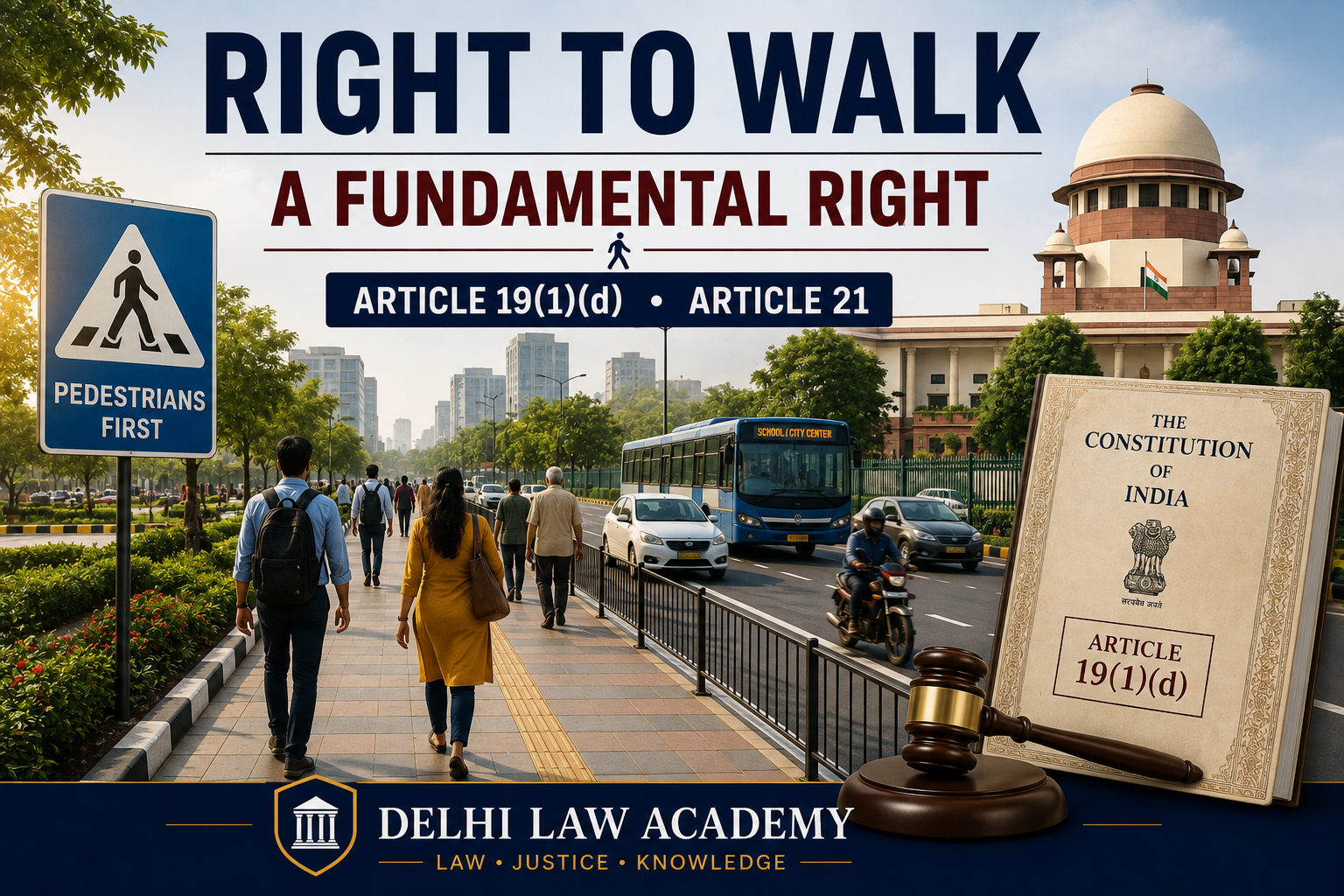
Walking is one of the simplest forms of human movement. Yet for millions of pedestrians, walking on Indian roads can involve significant risks because of inadequate footpaths, encroachment, lack of pedestrian crossings and the dominance of motorised traffic.
In an important constitutional judgment, the Supreme Court has now expressly recognised the right to walk on demarcated footpaths as a Fundamental Right and held that this right has priority over the movement of motorised vehicles.
Why in News?
On 19 June 2026, the Supreme Court delivered its judgment in Maniyar Iliyaz @ Shaik Riyaz & Anr. v. P. Ayyappan & Ors., Civil Appeal Nos. 4665–4666 of 2025.
The Bench comprising Justice Pamidighantam Sri Narasimha and Justice Atul S. Chandurkar held that the right to walk is a Fundamental Right under Part III of the Constitution.
The Court further held that this right includes the right to walk on safe and demarcated footpaths, and that such pedestrian rights have priority over movement by motorised vehicles. :contentReference[oaicite:2]{index=2}
The Case: Maniyar Iliyaz @ Shaik Riyaz v. P. Ayyappan
The case arose from a tragic road accident involving a father and his five-year-old son. While the father and child were walking towards the child's school, a tanker approached from behind and struck the child.
The Court noted a crucial fact: there was neither a footpath nor a pedestrian crossing at the location.
The tragedy led the Supreme Court to examine an issue that went beyond the individual claim for compensation: whether the Constitution itself protects a person's ability to walk safely on public roads.
The Court concluded that it does.
RJS Exam Point
Right to Walk = Fundamental Right under Part III
It is integral to Article 19(1)(d), read with Articles 19(1)(a), 19(1)(b), 19(1)(c) and 21.
What Did the Supreme Court Hold?
The Court made a clear constitutional declaration:
The right to walk is a Fundamental Right under Part III of the Constitution.
It includes the right to walk on demarcated footpaths.
The Court held that the right is integral to the right to movement guaranteed under Article 19(1)(d), read with Articles 19(1)(a), 19(1)(b), 19(1)(c) and Article 21.
Importantly, the Court stated that the fundamental right to walk on demarcated footpaths is primary and has priority over movement by motorised vehicles. :contentReference[oaicite:3]{index=3}
Article 19(1)(d): The Constitutional Basis of the Right to Walk
Article 19(1)(d) guarantees to every citizen the freedom to move freely throughout the territory of India.
Traditionally, the expression "freedom of movement" may be understood as the freedom to travel from one place to another. The Supreme Court's judgment gives this provision a more fundamental dimension by emphasising that walking itself is an essential form of movement.
The Court observed that the constitutional right to movement should not be understood only in terms of movement on wheels.
Walking predates motor vehicles and is the most basic form of physical movement. Therefore, the constitutional freedom of movement necessarily protects the ability of citizens to walk.
Why Are Footpaths a Fundamental Right?
The Court did not stop at recognising a general right to walk. It specifically brought demarcated footpaths within the scope of the Fundamental Right.
A footpath provides pedestrians with a designated space separated from motorised traffic. Without such infrastructure, pedestrians may be forced to share road space with cars, buses, trucks and other vehicles.
The Court therefore linked the right to walk with the corresponding need for safe and properly demarcated pedestrian infrastructure.
Right to Walk → Right to Safe, Demarcated Footpaths
Right to Walk and Article 21
The judgment also connects the right to walk with Article 21, which guarantees the right to life and personal liberty.
The Supreme Court has repeatedly interpreted Article 21 as protecting more than mere physical existence. The provision has been judicially connected with the right to live with dignity and with various conditions necessary for a meaningful life.
Safe access to public spaces and roads is closely connected with this understanding of life and personal liberty.
The Court therefore treated walking as an activity that is integral to life, while simultaneously grounding the specific freedom of movement in Article 19(1)(d). :contentReference[oaicite:4]{index=4}
Connection with Other Fundamental Rights
The Supreme Court's declaration is particularly interesting because it does not rely upon Article 19(1)(d) in isolation.
The Court held that the right to walk is integral to the right to movement under Article 19(1)(d), read with Articles 19(1)(a), 19(1)(b), 19(1)(c) and 21. :contentReference[oaicite:5]{index=5}
| Provision | Connection with Right to Walk |
|---|---|
| Article 19(1)(a) | Freedom of speech and expression; walking through public spaces can form part of expressive activity. |
| Article 19(1)(b) | Right to assemble peacefully and without arms; peaceful assemblies and processions necessarily involve movement and walking. |
| Article 19(1)(c) | Freedom to form associations, unions and co-operative societies; collective activities may involve movement through public spaces. |
| Article 19(1)(d) | Freedom to move freely throughout the territory of India — the primary constitutional basis for the right to walk. |
| Article 21 | Protection of life and personal liberty; safe walking is connected with life, dignity and personal safety. |
Walking Is More Than Transportation
The Court's reasoning also recognises that walking is not merely a means of travelling from one place to another.
Walking can be connected with social, cultural, religious and political activity. Public processions, pilgrimages, demonstrations and community activities frequently involve people moving together through public spaces.
The Court referred to examples such as Nagar Sankirtan, Pandharpur Wari, Kanwar Yatra, the Dandi March and the Bhoodan Movement to illustrate how walking can also have social, cultural and constitutional significance. :contentReference[oaicite:6]{index=6}
Right to Walk vs Right of Motorists
One of the most significant observations of the judgment is that the rights of pedestrians cannot simply be treated as subordinate to the convenience of motorised traffic.
The Court expressly held that the fundamental right to walk on demarcated footpaths is primary and has priority over movement by motorised vehicles.
This does not mean that motorists have no constitutional or statutory rights to use roads. Rather, it establishes that the existence of motorised traffic cannot be used as a justification for denying pedestrians safe and designated space to walk.
Roads are not meant only for motorised vehicles.
The pedestrian's constitutional right to walk must also be protected.
The Judgment Is Not Only About Compensation
The Supreme Court awarded compensation of ₹11,44,628 to the appellants in the case. However, the constitutional significance of the judgment extends well beyond the individual compensation claim. :contentReference[oaicite:7]{index=7}
The Court used the case to articulate a broader constitutional principle concerning pedestrian rights and the corresponding responsibilities of public authorities.
This transforms the issue from merely a question of compensation after an accident into a question of enforceable constitutional rights and duties relating to pedestrian infrastructure.
📘 Stay Ahead with Delhi Law Academy!
Get access to free monthly current affairs, read our insightful blogs,
and explore free study resources prepared by experts at DLA Jaipur. 🚀