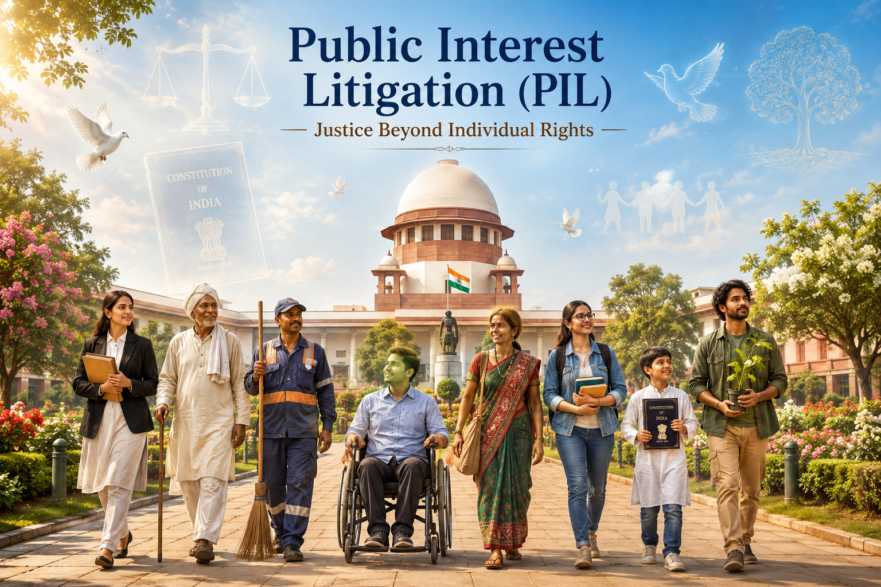
Public Interest Litigation (PIL) in India: Constitutional Foundation & Recent Supreme Court Developments Public Interest Litigation (PIL) is one of the most significant judicial innovations in India. It transformed the traditional justice delivery system by allowing public-spirited individuals and organizations to approach constitutional courts on behalf of disadvantaged sections of society or for issues affecting the larger public interest. Over …
Harish Rana v. Union of India (2026)
Harish Rana v. Union of India (2026): India’s First Court-Approved Passive Euthanasia Case The Supreme Court’s judgment in Harish Rana v. Union of India (2026) marks a historic milestone in India’s constitutional and medical jurisprudence. For the first time, the Supreme Court permitted the withdrawal of life-sustaining treatment in an individual case by applying the legal framework laid down in …
Money Laundering in India: Meaning, Stages, PMLA, ED
Money Laundering in India: Meaning, Stages, PMLA & Government Measures Money laundering is one of the biggest threats to the integrity of a country’s financial system. It enables criminals, terrorists, drug traffickers, tax evaders, and corrupt public officials to disguise the illegal origin of their money and introduce it into the legitimate economy. In India, the Enforcement Directorate (ED) and …
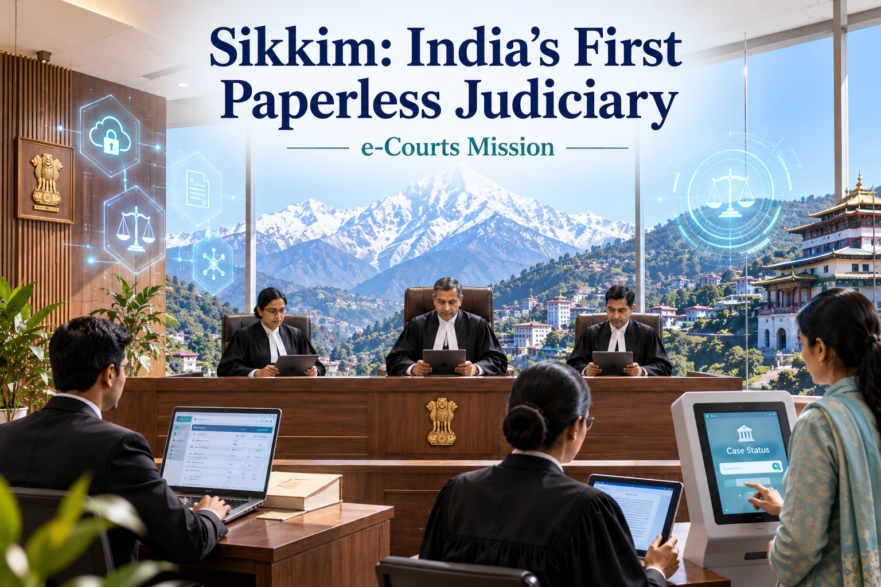
Sikkim Becomes India’s First Paperless State Judiciary: e-Courts Mission Mode Project
Sikkim Becomes India’s First Paperless State Judiciary India’s judicial system has entered a new era of digital governance with Sikkim becoming the country’s first fully paperless state judiciary. Declared by the Chief Justice of India, this milestone reflects the success of the e-Courts Mission Mode Project, a nationwide initiative aimed at modernising courts through technology. By replacing physical files with …
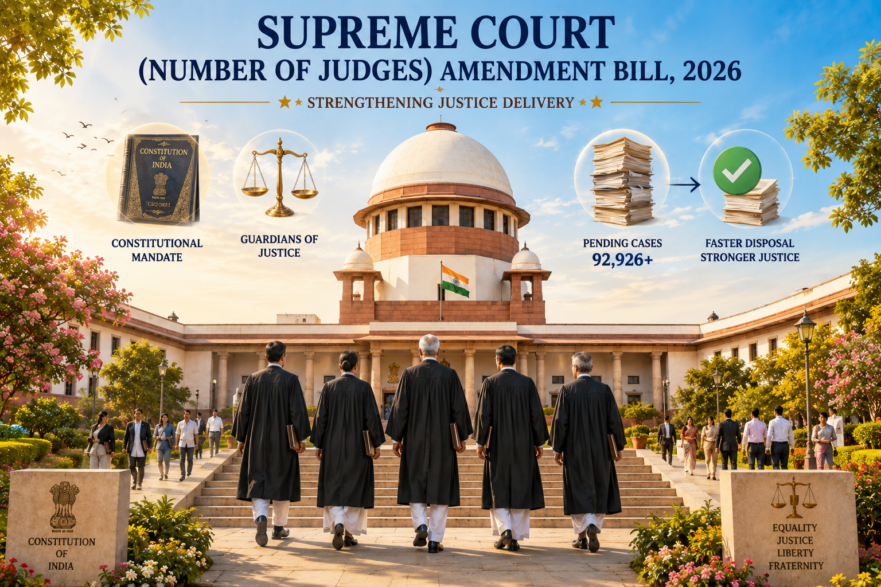
Supreme Court (Number of Judges) Amendment Bill, 2026
Supreme Court (Number of Judges) Amendment Bill, 2026 The Union Cabinet has approved the Supreme Court (Number of Judges) Amendment Bill, 2026, proposing an increase in the sanctioned strength of judges of the Supreme Court of India from 33 to 37 judges (excluding the Chief Justice of India). The move aims to strengthen the country’s highest judicial institution, reduce the …
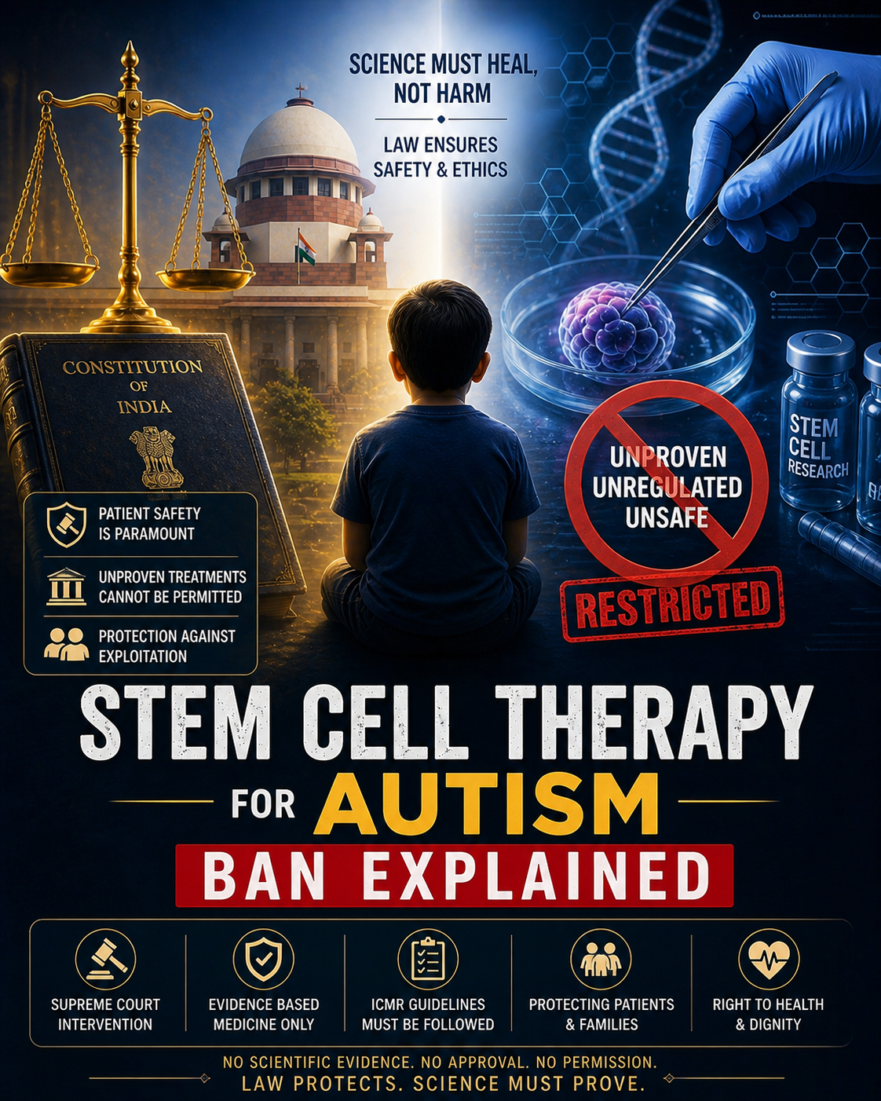
Stem Cell Therapy for Autism Ban by Supreme Court Explained
Stem Cell Therapy for Autism: Ban by Supreme Court Explained Stem cell therapy has been widely discussed as a potential treatment for various medical conditions, including autism. However, in India, the use of stem cell therapy for autism has raised serious legal, medical, and ethical concerns. The Supreme Court has intervened in this area to ensure that unproven and unregulated …
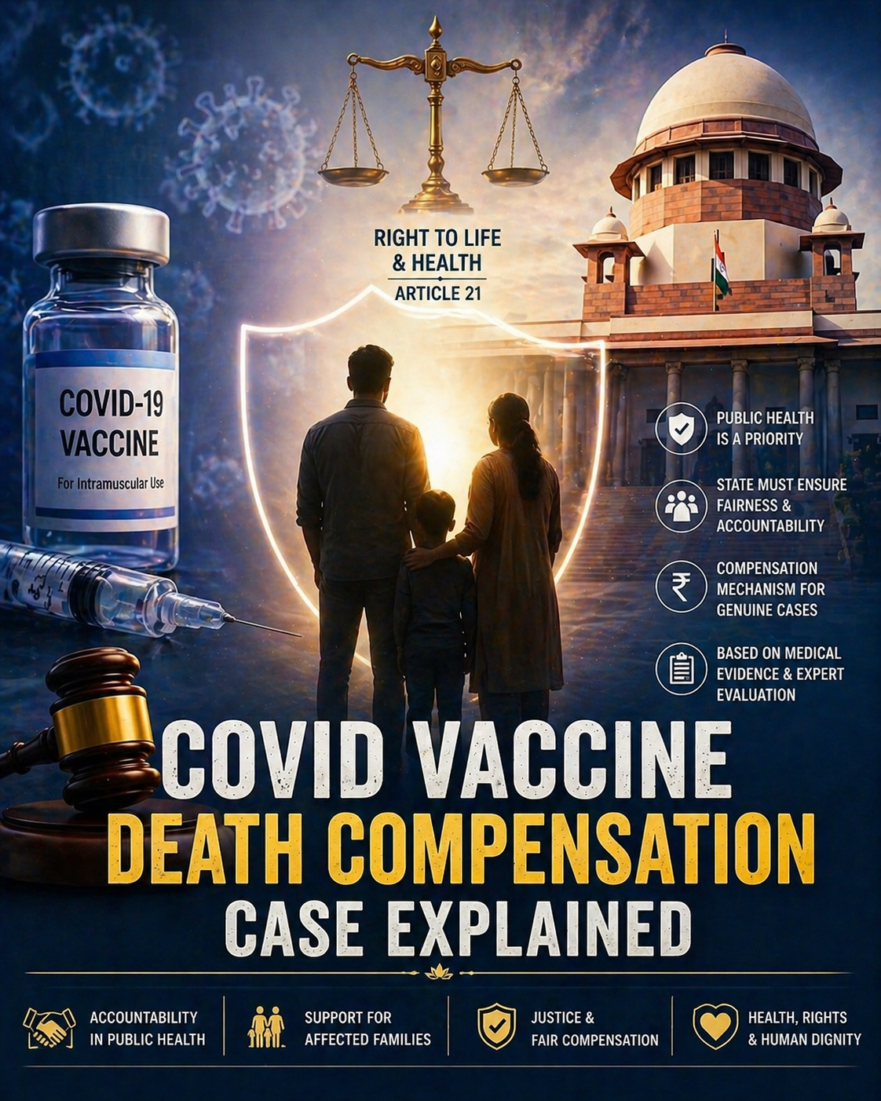
COVID Vaccine Death Compensation Case Explained
COVID Vaccine Death Compensation Case: Supreme Court Position Explained During the COVID-19 pandemic, vaccines were introduced as a critical public health measure. However, concerns arose regarding compensation in cases where individuals allegedly died due to adverse effects of vaccination. The Supreme Court addressed this issue and clarified the legal position regarding compensation and state responsibility. 📚 Background of the Issue …
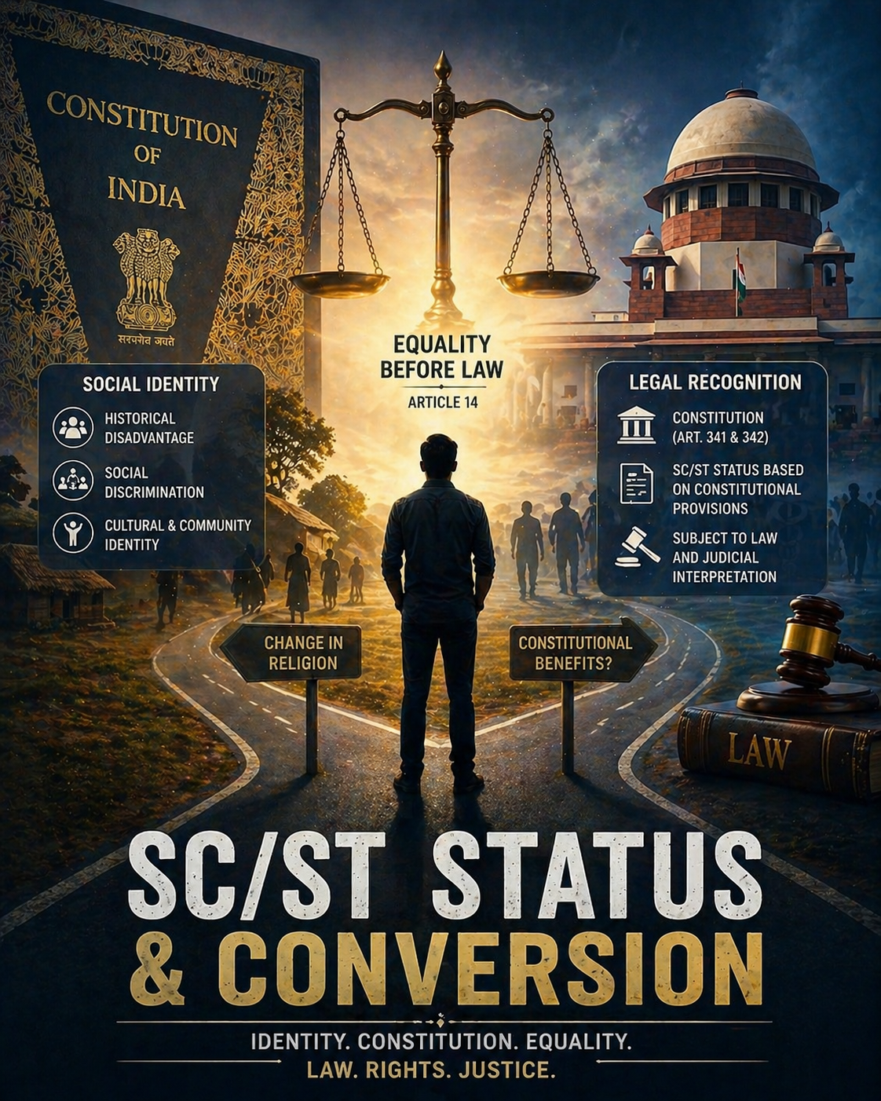
SC/ST Status After Religious Conversion Case Explained
SC/ST Status After Religious Conversion: Supreme Court Position Explained The question of whether a person belonging to Scheduled Castes (SC) or Scheduled Tribes (ST) retains their status after religious conversion has been a significant constitutional issue in India. This issue involves interpretation of constitutional provisions, social realities, and affirmative action policies. 📚 Background of the Issue Scheduled Castes are identified …
Abortion Rights for Rape Survivors Beyond 20 Weeks Explained
Abortion Rights for Rape Survivors Beyond 20 Weeks: Supreme Court Position The issue of abortion rights for rape survivors beyond 20 weeks of pregnancy has been a critical legal and humanitarian concern in India. Courts have been approached in several cases where victims sought permission for termination beyond the statutory limit. The Supreme Court has played a key role in …
Maternity Benefits for Adoptive Mothers Case Explained
Maternity Benefits for Adoptive Mothers: Supreme Court Judgment Explained The issue of maternity benefits for adoptive mothers has gained significant attention in recent years. Traditionally, maternity leave laws focused only on biological mothers, leaving adoptive mothers without similar protection. The Supreme Court addressed this issue and clarified the rights of adoptive mothers, ensuring equality and dignity under the law. 📚 …