
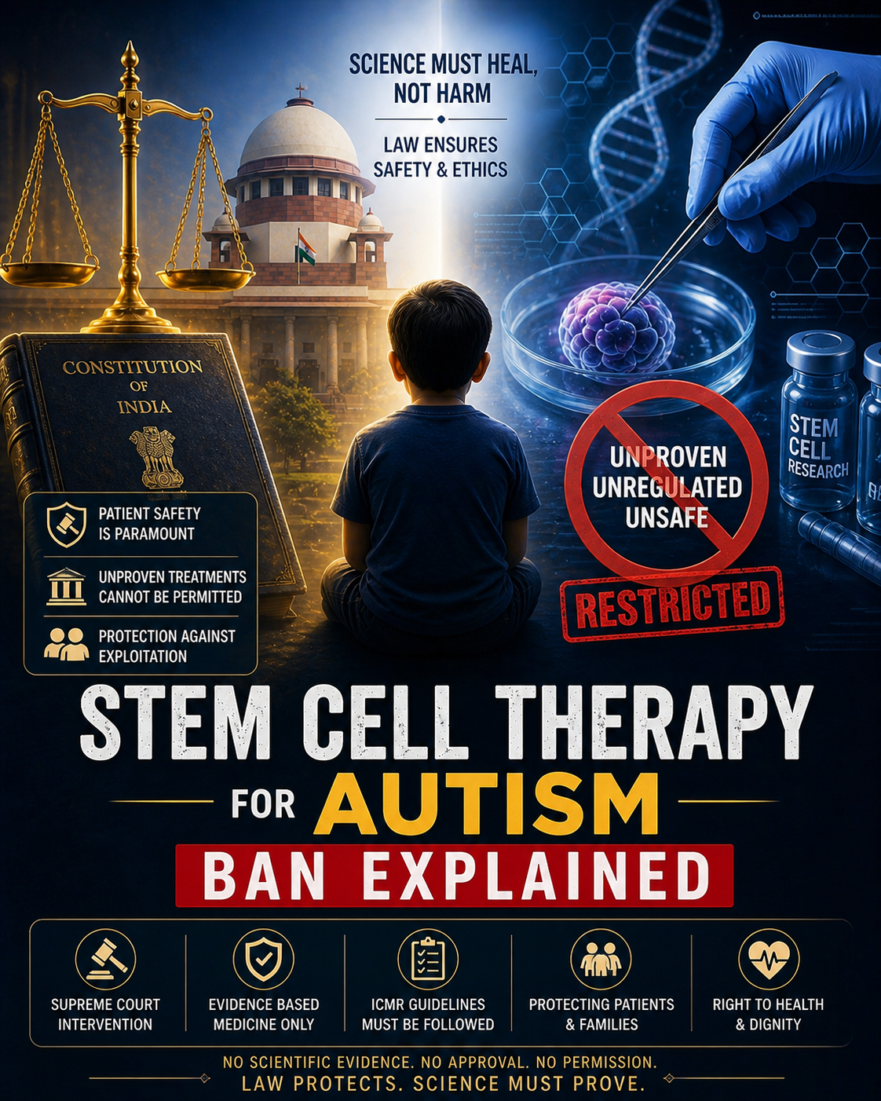
Stem Cell Therapy for Autism: Ban by Supreme Court Explained
Stem cell therapy has been widely discussed as a potential treatment for various medical conditions, including autism. However, in India, the use of stem cell therapy for autism has raised serious legal, medical, and ethical concerns.
The Supreme Court has intervened in this area to ensure that unproven and unregulated medical treatments are not offered to vulnerable patients.
📚 Background of the Issue
Several private clinics in India began offering stem cell therapy as a treatment for autism, often claiming significant improvement. However, these treatments lacked proper scientific validation and regulatory approval.
This led to concerns regarding patient safety, exploitation, and medical ethics.
⚖️ Core Legal Issue
Whether stem cell therapy for autism can be legally permitted without established scientific evidence and regulatory approval.
👨⚖️ Supreme Court Position
The Supreme Court emphasized that medical treatments must be evidence-based and cannot be offered without proper clinical validation.
The Court supported restrictions on stem cell therapy for autism and reinforced the role of regulatory authorities in preventing misuse.
⚖️ Key Principles Laid Down
- Patient safety is of paramount importance
- Medical treatments must be scientifically proven
- Unregulated therapies cannot be permitted
- Protection against exploitation of patients is necessary
📜 Regulatory Framework
- ICMR (Indian Council of Medical Research) Guidelines
- Clinical Trials Regulations
- Medical ethics standards
⚠️ Risks of Unproven Stem Cell Therapy
- Lack of scientific evidence
- Potential health complications
- High financial costs
- False hope for families
📊 Impact of the Judgment
- Strengthened regulation of experimental therapies
- Protected patients and families
- Promoted evidence-based medical practice
🔗 Related Guides
📊 Importance for Judiciary Aspirants
This topic is important for understanding the intersection of constitutional law, medical law, and public policy. Questions may be asked on patient rights, regulatory frameworks, and judicial intervention in healthcare.
📌 Conclusion
The Supreme Court’s intervention ensures that medical innovation does not come at the cost of safety and ethics. Only scientifically validated and regulated treatments can be offered legally in India.
❓ Frequently Asked Questions (FAQs)
1. Is stem cell therapy for autism allowed in India?
No, it is not permitted without proper scientific validation and regulatory approval.
2. Why did the Supreme Court restrict stem cell therapy?
Due to lack of scientific evidence and concerns about patient safety.
3. Which authority regulates stem cell therapy in India?
The Indian Council of Medical Research (ICMR) provides guidelines.
4. Is stem cell therapy proven for autism?
No, it is still considered experimental and unproven.
5. What are the risks of such therapy?
Health risks, financial exploitation, and lack of effectiveness.
6. Why is this case important for law students?
It highlights regulation, medical ethics, and judicial control over healthcare practices.
📘 Stay Ahead with Delhi Law Academy!
Get access to free monthly current affairs, read our insightful blogs,
and explore free study resources prepared by experts at DLA Jaipur. 🚀