
A DETAILED NOTE ON THE PREAMBLE TO THE CONSTITUTION
PREAMBLE
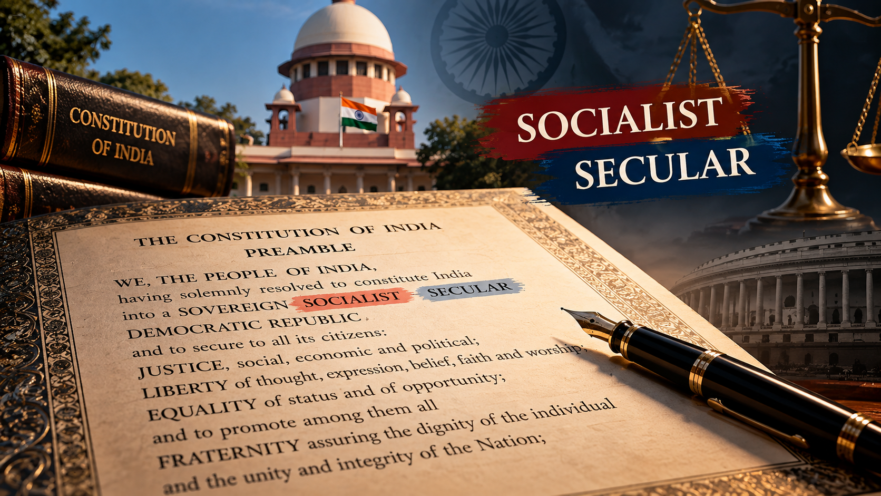
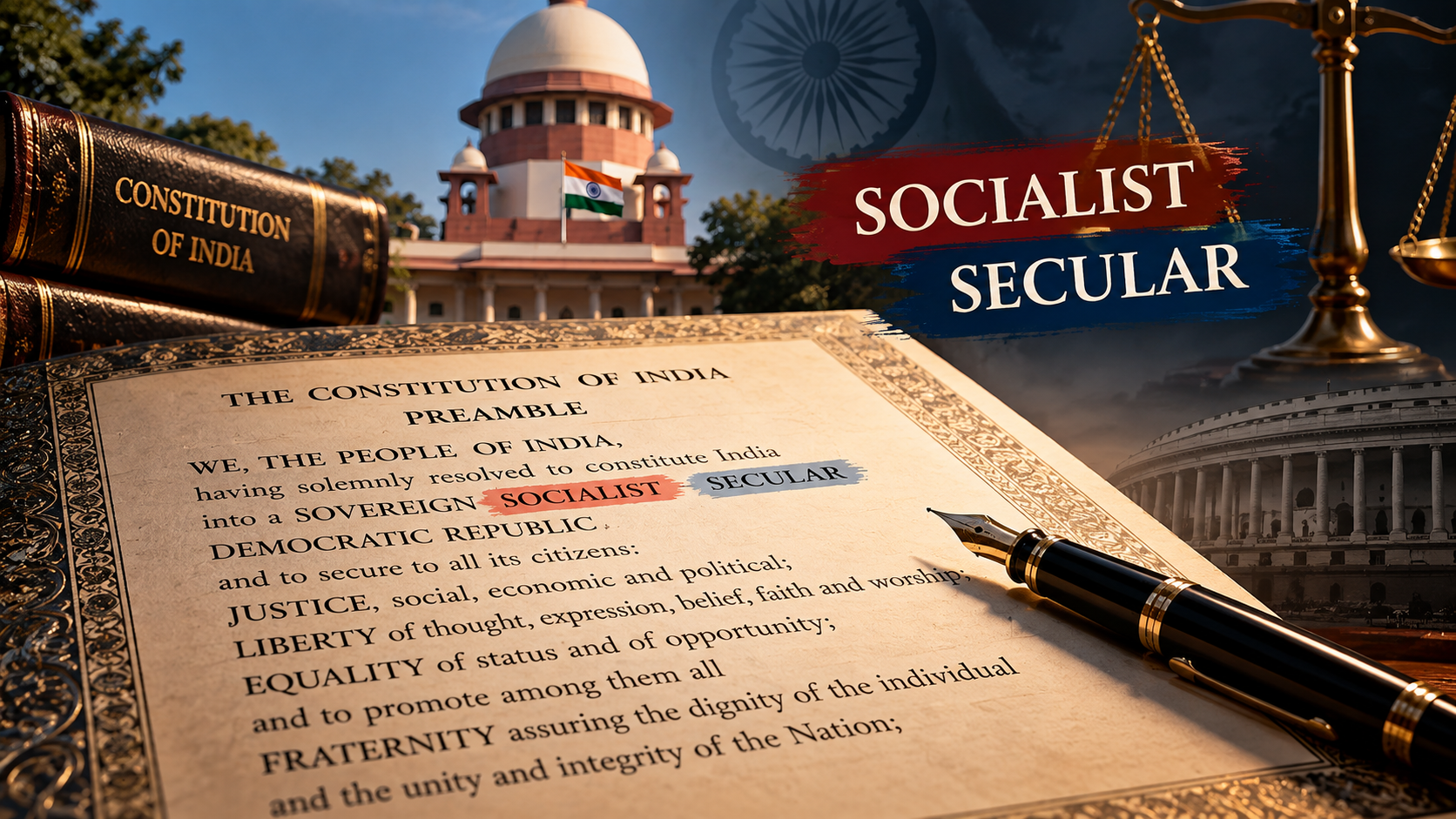
WE, THE PEOPLE OF INDIA, having solemnly resolved to constitute India into a SOVEREIGN SOCIALIST SECULAR DEMOCRATIC REPUBLIC and to secure to all its citizens:
JUSTICE, social, economic and political;
LIBERTY of thought, expression, belief, faith and worship;
EQUALITY of status and of opportunity;
and to promote among them all
FRATERNITY assuring the dignity of the individual and the unity and integrity of the Nation;
IN OUR CONSTITUENT ASSEMBLY this twenty-sixth day of November, 1949, do HEREBY ADOPT, ENACT AND GIVE TO OURSELVES THIS CONSTITUTION.
The words Socialist and Secular and ‘integrity’ were added by the 42nd Amendment 1976.
· Preamble is a solemn resolution by the people of India adopted on 26th November, 1949
Objectives:
(1) To constitute India into a
- Sovereign
- Socialist
- Secular
- Democratic
- Republic
(2) To secure to Indian citizens
- Justice : social, economic and political
- Liberty : of thought, expression, belief, faith and worship
- Equality : of status and of opportunity
(3) To promote
- fraternity among Indian citizens
The objective of “fraternity” is to be achieved while assuring
- the dignity of the individual and
- the unity and integrity of the nation
Justice K.S. Puttaswamy (Retd.) v. Union of India : August 2017
- The keynote of the Preamble was to lay emphasis on two positive aspects – one, “the Unity of the Nation” and the second “Dignity of the individual”.
- The expression “Dignity” implied an obligation on the Union to respect the personality of every citizen.
- Regard and respect by every individual for the dignity of the other brings the unity and integrity of the Nation.
Importance of the Preamble*
- While interpreting any provision of the Constitution
- when any ambiguity is noticed or the language admits of meaning more than one
- Preamble to the Constitution may be relied on to find out the true meaning
Subramanian Swamy v. Union of India : 2016 SC
Fraternity explained
- The concept of fraternity expects every citizen to respect the dignity of the other
- Mutual respect is the fulcrum of fraternity that assures dignity
Question:
· Is the Preamble a part of our Constitution?
Ans:
· No, the Preamble is not a part of our Constitution
Source: Supreme Court in the Berubari Union case [1960]
Question:
· Is the Preamble a part of our Constitution?
Ans:
· Yes, the Preamble is a part of our Constitution
Source: Supreme Court in Keshavananda Bharati case [1973]
Question:
· Whether the Preamble forms a basic feature of the Constitution?
Ans:
· Yes, the Objectives specified in the Preamble form a basic feature of the Constitution and thus cannot be amended by Parliament u/a 368
Source: Keshavananda Bharati v. State of Kerala [1973 SC]
📘 Free Study Material for Judiciary Aspirants!
Download our FREE study material prepared by Delhi Law Academy’s expert faculty.
Constitutional Validity of Insertion of Words ‘Socialist’ and ‘Secular’ in the Preamble
· Dr Balram Singh v. Union of India
· [2024 INSC 893]
Grounds of challenge
Ground 1
- The word ‘secular’ was deliberately eschewed by the Constituent Assembly, and the word ‘socialist’ fetters and restricts the economic policy choice vesting in the elected government, which represents the will of the people.
Ground 2
- The Forty-second Amendment is vitiated and unconstitutional as it was ‘passed’ during the Emergency on November 2, 1976, after the normal tenure of the Lok Sabha that had ended on March 18, 1976.
- Thus, there was no will of the people to sanction the amendment.
Supreme Court
- The power to amend unquestionably rests with the Parliament.
- This amending power extends to the Preamble.
- Amendments to the Constitution can be challenged on various grounds, including violation of the basic structure of the Constitution.
Response to Ground 1
- While it is true that the Constituent Assembly had not agreed to include the words ‘socialist’ and ‘secular’ in the Preamble, the Constitution is a living document, with power given to the Parliament to amend it in terms of and in accord with Article 368.
- Over time, India has developed its own interpretation of secularism, wherein the State neither supports any religion nor penalizes the profession and practice of any faith.
- This principle is enshrined in Articles 14, 15, and 16 of the Constitution, which prohibit discrimination against citizens on religious grounds while guaranteeing equal protection of laws and equal opportunity in public employment.
· Expression “secularism” in the Indian context:
- The State maintains no religion of its own
- All persons are equally entitled to freedom of conscience along with the right to freely profess, practice, and propagate their chosen religion, and
- All citizens, regardless of their religious beliefs, enjoy equal freedoms and rights
- ‘Socialist’ denotes the State’s commitment to be a welfare State and its commitment to ensuring equality of opportunity.
- India has consistently embraced a mixed economy model, where the private sector has flourished, expanded, and grown over the years.
- The word ‘socialism’ reflects the goal of economic and social upliftment and does not restrict private entrepreneurship and the right to business and trade, a fundamental right under Article 19(1)(g)
Additional ground
- The fact that the writ petitions were filed in 2020, forty-four years after the words ‘socialist’ and ‘secular’ became integral to the Preamble, makes the prayers particularly questionable.
Result:
· Challenge to the insertion of the two words is dismissed.
Explore More Free Resources from Delhi Law Academy
Stay updated with our monthly current affairs and explore more important legal and judicial-service articles from Delhi Law Academy.
Contact us
📍 Delhi Law Academy – Jaipur Branch
6C, Tower 2, Coaching Hub, Pratap Nagar, Jaipur – 302033
📞 Phone:
+91 9911916552
+91 8447285606
✉️ Email:
contactus@delhilawacademy.com