
What to Do If You Are Scammed Online in India
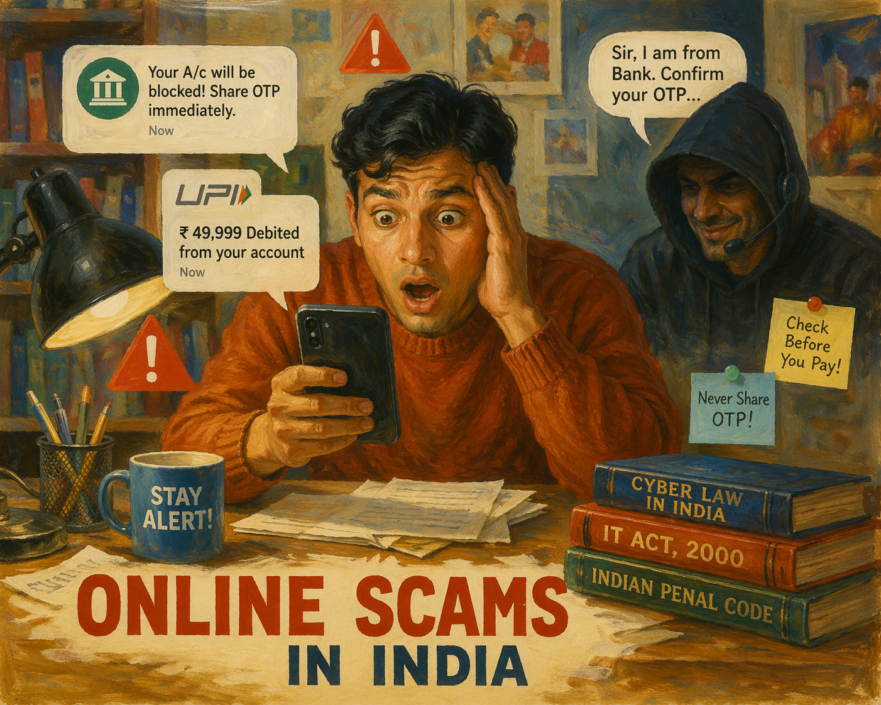
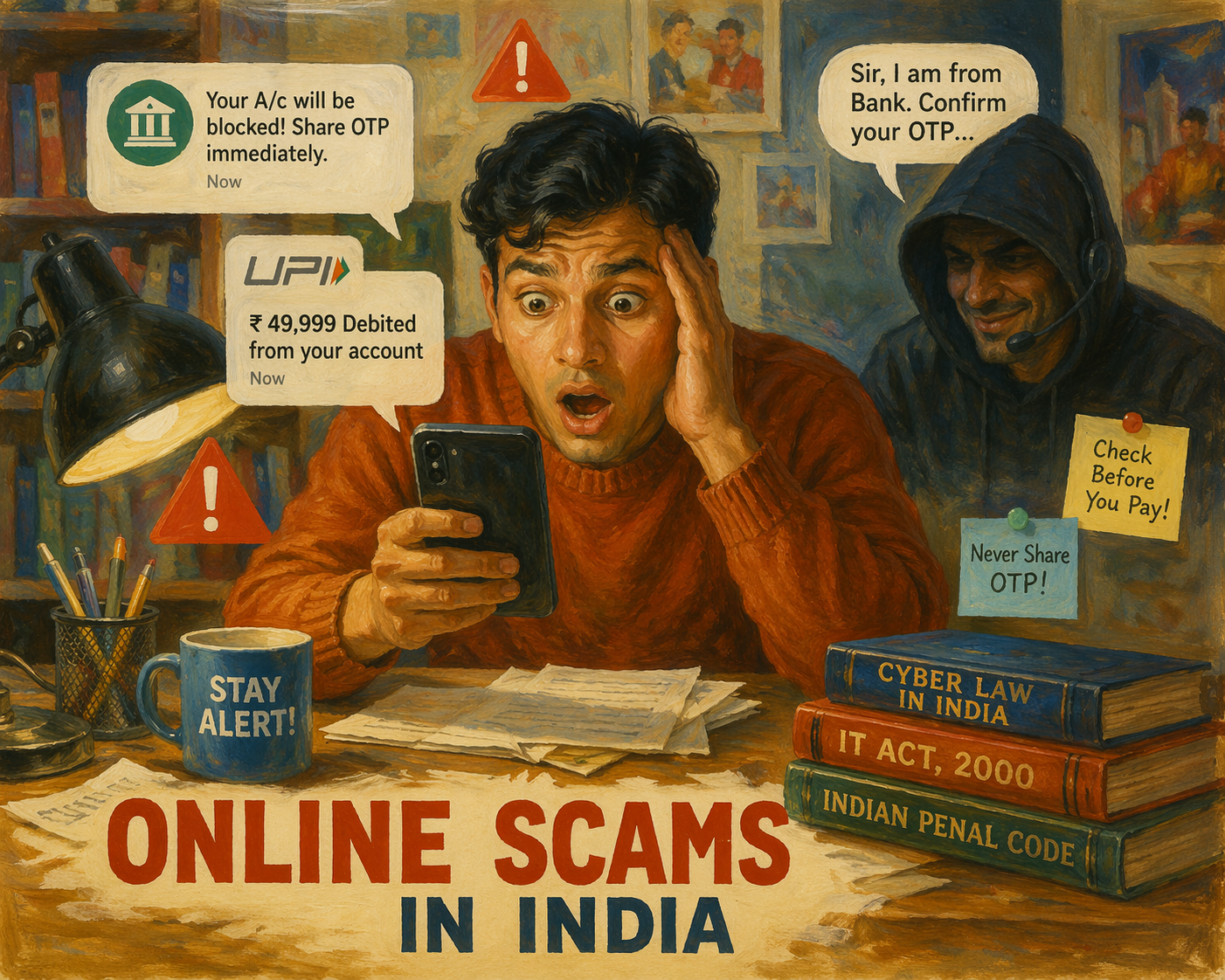
Online scams have become extremely common in India. From fake calls and phishing links to UPI fraud and investment scams, people lose money every day due to cyber fraud.
If you have been scammed online, taking immediate action is crucial. The faster you act, the higher the chances of preventing further loss and recovering your money.
Read the complete cyber law guide here:
Cyber Crime in India: Laws, Types and Legal Remedies
🚨 Immediate Steps to Take After Online Scam
If you have been a victim of cyber fraud, follow these steps immediately:
- Contact Your Bank: Inform your bank or payment provider immediately to block transactions.
- Call Helpline 1930: This is the national cyber fraud helpline for quick action.
- Block Cards and Accounts: Freeze debit/credit cards, UPI, and net banking.
- Change Passwords: Update passwords of email, banking, and social media accounts.
- Do Not Delay: Reporting within hours increases chances of recovery.
📸 Collect and Preserve Evidence
Proper evidence is important for investigation and recovery:
- Screenshots of messages, emails, or chats
- Transaction receipts or bank statements
- Phone numbers or email IDs used by fraudsters
- Links or websites involved in the scam
📝 How to Report Online Scam in India
You can report cyber fraud through official channels:
- Visit the National Cyber Crime Reporting Portal
- Select financial fraud complaint
- Fill details and upload evidence
- Track complaint status online
Alternatively, you can file an FIR at your nearest police station.
⚖️ Legal Provisions Applicable
Cyber fraud cases are covered under multiple laws:
📜 Information Technology Act, 2000
- Section 66 – Computer-related offences
- Section 66C – Identity theft
- Section 66D – Cheating by personation
⚖️ Indian Penal Code (IPC)
- Section 420 – Cheating and fraud
- Section 419 – Cheating by personation
💰 Can You Recover Money Lost in Online Scam?
Recovery is possible in some cases, especially if reported quickly.
- Banks may freeze the recipient account
- Police may trace transactions
- Cyber cells may assist in recovery
Delay in reporting reduces chances of recovery.
⚠️ Common Types of Online Scams
- UPI collect request scams
- Fake customer care calls
- OTP fraud
- Investment scams
- Job frauds
- Lottery scams
🔐 Tips to Avoid Online Scams
- Never share OTP or PIN
- Do not click unknown links
- Verify callers before sharing details
- Use official apps and websites only
- Avoid urgent payment requests
🔗 Related Guides
UPI Fraud and Online Payment Scams: Legal Remedies
How to File Cyber Crime Complaint in India
Social Media Harassment and Online Blackmail Laws in India
📊 Importance for Law Students and Judiciary Aspirants
Cyber fraud is an emerging area in criminal law and is increasingly tested in exams. Understanding legal remedies and procedure is essential.
📌 Conclusion
Online scams can happen to anyone, but quick action can reduce damage and improve chances of recovery.
Awareness, caution, and proper legal steps are key to dealing with cyber fraud in India.
❓ Frequently Asked Questions (FAQs)
1. What should I do immediately after online scam in India?
Contact your bank, call helpline 1930, block accounts, and report the fraud immediately.
2. Can I recover money lost in online fraud?
Yes, if reported quickly, authorities may freeze the transaction and help recover funds.
3. Where can I complain about cyber fraud in India?
You can file a complaint on the National Cyber Crime Reporting Portal or at a police station.
4. What is cyber crime helpline number in India?
The helpline number is 1930 for reporting financial cyber fraud.
5. Which law applies to online scams in India?
The IT Act, 2000 and IPC provisions like Section 420 apply.
6. How fast should I report online fraud?
You should report immediately, preferably within a few hours, to improve recovery chances.
📘 Stay Ahead with Delhi Law Academy!
Get access to free monthly current affairs, read our insightful blogs,
and explore free study resources prepared by experts at DLA Jaipur. 🚀