
Social Media Harassment and Online Blackmail Laws in India
With the widespread use of social media platforms like Instagram, WhatsApp, and Facebook, cases of online harassment and blackmail have increased significantly. Victims often face threats, abuse, or misuse of personal content.
Indian law provides strong protection against such offences. Understanding your legal rights is essential to take timely action.
Read the complete cyber law guide here:
Cyber Crime in India: Laws, Types and Legal Remedies
⚠️ What is Social Media Harassment?
Social media harassment includes any form of abuse or threat through digital platforms.
- Sending abusive or threatening messages
- Cyber stalking
- Posting defamatory content
- Sharing private photos without consent
- Creating fake profiles
🚨 What is Online Blackmail?
Online blackmail occurs when a person threatens to release private information, photos, or videos unless money or favors are given.
This is a serious criminal offence in India.
⚖️ Laws Against Online Harassment and Blackmail
📜 Information Technology Act, 2000
- Section 66E – Violation of privacy
- Section 67 – Publishing obscene content
- Section 67A – Sexually explicit content
⚖️ Indian Penal Code (IPC)
- Section 354D – Cyber stalking
- Section 499 – Defamation
- Section 503 – Criminal intimidation
- Section 507 – Anonymous threats
- Section 509 – Insult to modesty of a woman
🚨 What to Do If You Are Being Harassed or Blackmailed
- Do not respond to threats
- Do not send money or comply with demands
- Take screenshots of messages and evidence
- Block the offender on social media
- Report immediately to authorities
📝 How to File Complaint for Online Harassment
- Visit National Cyber Crime Reporting Portal
- Select complaint category (women/child related or others)
- Upload evidence such as screenshots
- Submit complaint
You can also file FIR at the nearest police station.
🚓 Police and Legal Action
Police can take strict action in such cases:
- Register FIR
- Trace accused through digital evidence
- Arrest offender
- Seize devices used in crime
🔐 Tips to Stay Safe Online
- Keep social media accounts private
- Avoid sharing personal information publicly
- Do not accept unknown friend requests
- Use strong passwords
- Enable privacy settings
🔗 Related Guides
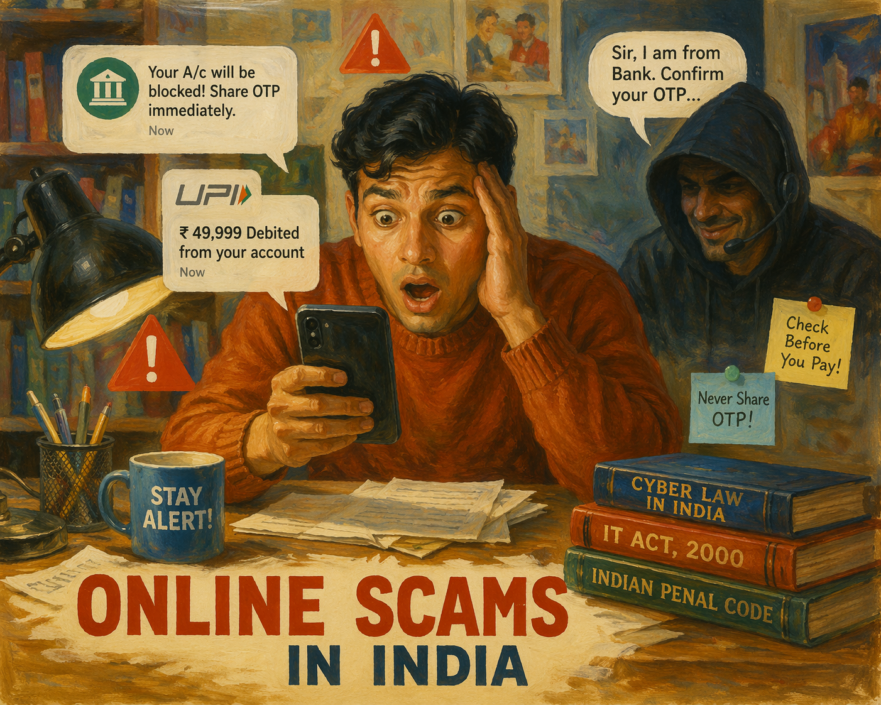
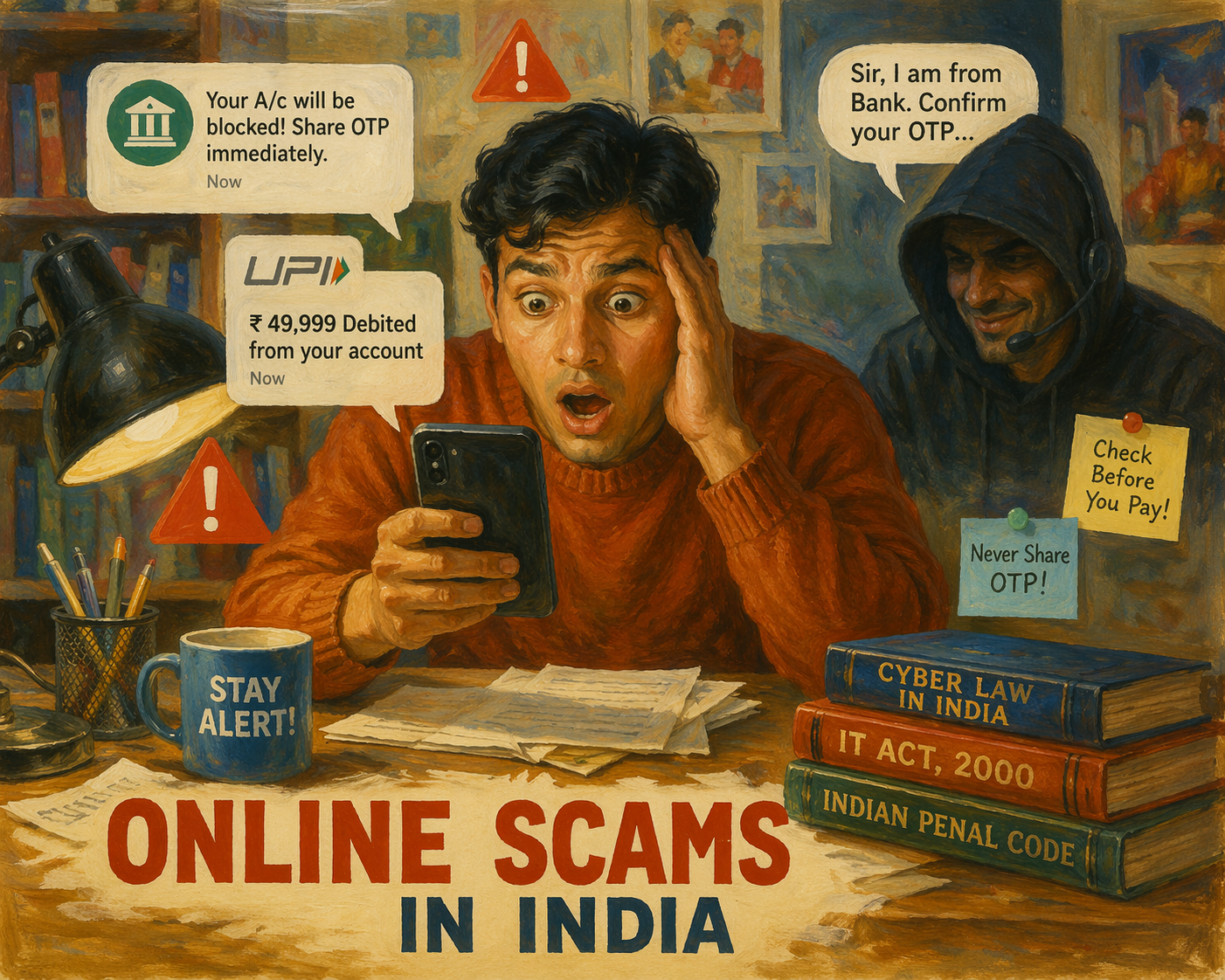
What to Do If You Are Scammed Online in India
UPI Fraud and Online Payment Scams: Legal Remedies
How to File Cyber Crime Complaint in India
📊 Importance for Law Students and Judiciary Aspirants
Cyber harassment and privacy laws are important topics in modern criminal law and are frequently tested in exams.
📌 Conclusion
Social media harassment and online blackmail are serious offences under Indian law.
Victims should act quickly, preserve evidence, and use legal remedies to protect themselves and seek justice.
❓ Frequently Asked Questions (FAQs)
1. What is social media harassment in India?
It includes online abuse, threats, stalking, and misuse of personal content on digital platforms.
2. Is online blackmail a crime in India?
Yes, it is a serious criminal offence punishable under IPC and IT Act.
3. How to complain about online harassment in India?
You can file a complaint on the cyber crime portal or at a police station.
4. Which law applies to online harassment?
IT Act sections 66E, 67 and IPC sections 354D, 503, 509 apply.
5. Can police trace social media offenders?
Yes, police can trace offenders using digital evidence.
6. What should I do if someone is blackmailing me online?
Do not comply, collect evidence, and report immediately.
📘 Stay Ahead with Delhi Law Academy!
Get access to free monthly current affairs, read our insightful blogs,
and explore free study resources prepared by experts at DLA Jaipur. 🚀