

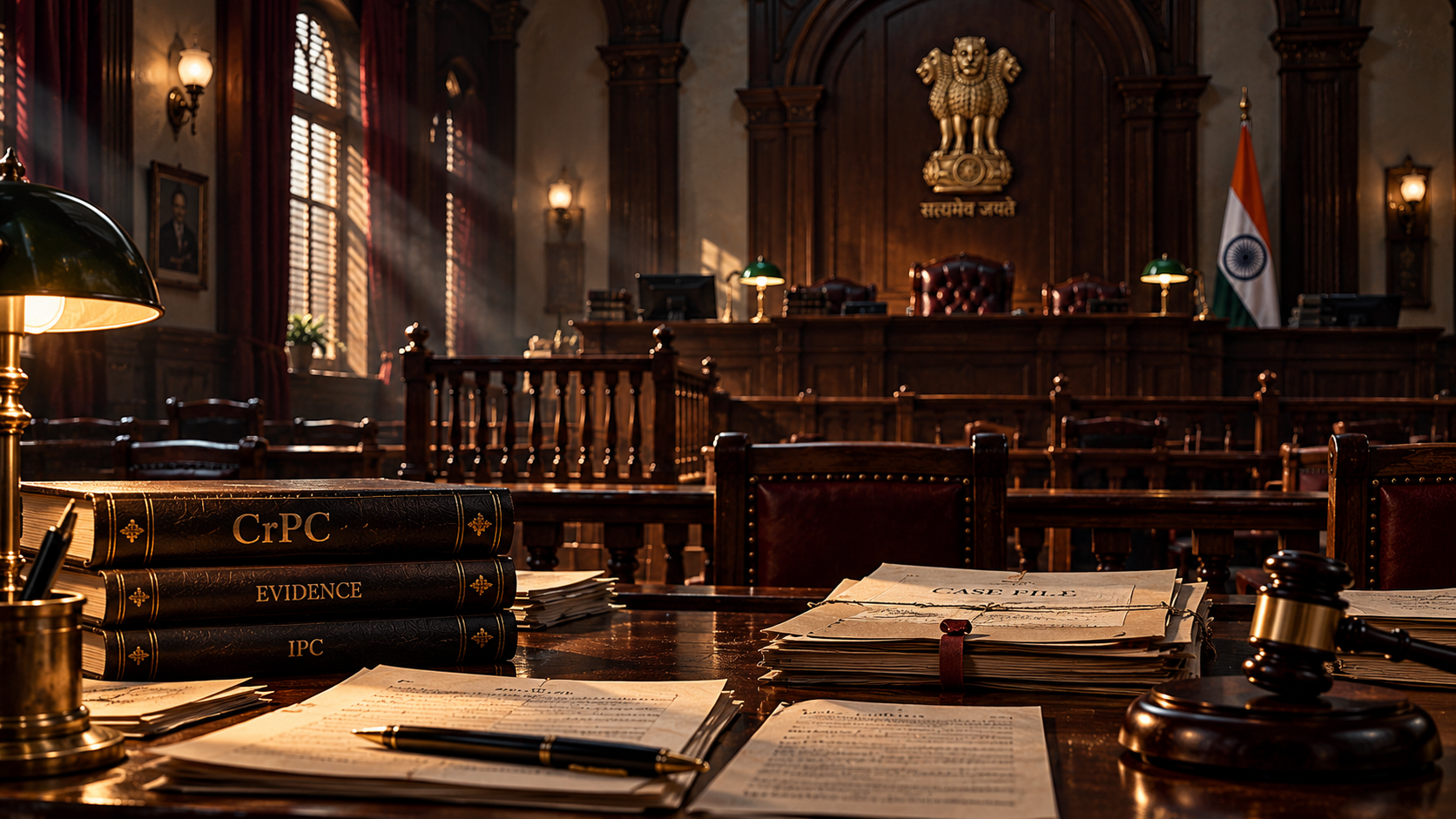
CONFESSIONS TO MAGISTRATES AND SERACHES BY POLICE
SECTIONS 164 – 165
CODE OF CRIMINAL PROCEDURE EXPLAINED
The Code of Criminal Procedure forms the bedrock of any and every Judicial Service exam in the country. Its thorough knowledge is a must for all aspirants of RJS, DJS, PCS (J) and every other Judicial Service exam. To help such aspirants DELHI LAW ACADEMY JAIPUR has launched a series of study material modules on all important aspects of this vital part of their syllabus:
CODE OF CRIMINAL PROCEDURE
CHAPTER XII – POLICE INVESTIGATION
Section 164(5)
- Magistrate shall have power to administer oath
- to the person whose statement is so recorded
Section 164(5A)
- In cases punishable u/s
- 354, 354A, 354B, 354C, 354D IPC
- 376, 376A, 376AB, 376B, 376C, 376D, 376DA, 376DB, 376E IPC
- 509 IPC
- Judicial Magistrate
- shall record statement of the person against whom such offence has been Committed
- as soon as the commission of offence is brought to the notice of police
- If the person making statement
- is mentally or physically disabled
- Magistrate shall take assistance
- of an interpreter or a special educator in recording the statement
- Such statement shall be video graphed
- A statement recorded of a person who is mentally or physically disabled
- shall be considered
- a statement in lieu of examination-in-chief as specified in section 137 of the Indian Evidence Act
- such that
- maker of the statement can be cross-examined on such statement
- without the need for recording the same at the time of trial
Section 164(6)
- Magistrate recording a confession or statement
- shall forward it to the Magistrate by whom the case is to be inquired into or tried
Explanatory Notes from DLA on section 164:
Question:
- Is a statement made under section 164 substantive evidence?
Ans:
- A statement made under S. 164 can never be used as substantive evidence
- but it can be used to support or challenge the evidence given in Court by the person who made the statement
Authority: Bhuboni Sahu v. King [1949 PC]
Section 164A – Medical examination of the victim of rape
- when
- an offence of rape or its attempt is under investigation and
- it is proposed
- to get the person of the woman examined by a medical expert
- such examination shall be conducted
- by a registered medical practitioner in a hospital run by Govt or local authority and
- by any other registered medical practitioner, in absence of such practitioner
- with the consent of such woman or of a competent person
- Such woman shall be sent to such registered medical practitioner
- within 24 hours from receiving information of such offence
Section 164A (2)
- The registered medical practitioner
- shall examine her person and
- prepare a report of his examination, without delay
📘 Free Study Material for Judiciary Aspirants!
Download our FREE study material prepared by Delhi Law Academy’s expert faculty.
Section 164A (4)
- The report shall specifically record
- that consent of the woman or of the competent person had been obtained
Section 164A (6)
- The registered medical practitioner
- shall forward the report to the investigating officer without delay
- who shall forward it
- to the Magistrate u/s173 (5)
Section 164A (7)
- This section shall not rendering lawful
- any examination without the consent of the woman or of any person competent to give such consent on her behalf
Section 165 – Search by police officer
- Whenever a police officer making an investigation
- has reasonable grounds for believing
- that anything necessary for investigation may be found in a place within limits of his police station and
- that such thing cannot be otherwise obtained without undue delay
- such officer
- may search for such thing in any place within limits of such station
- after recording in writing grounds of his belief and specifying the thing for which search is to be made
- A police officer proceeding as above
- shall, if practicable, conduct the search in person
- If he is unable to conduct the search in person, he may require
- any officer subordinate to him to make the search
- after recording in writing his reasons for so doing
- He shall deliver to such subordinate officer an order in writing
- specifying the place to be searched and
- the thing to be searched, so far as possible
- Such subordinate officer may thereupon
- search for such thing in such place
- Provisions of this Code as to searches contained in section 100
- shall apply to a search made under this section
- Copies of any record made under this section
- shall forthwith be sent to the nearest Magistrate empowered to take cognizance of the offence
- Owner or occupier of the place searched
- shall, on application, be furnished, free of cost with a copy of the same by the Magistrate
Explore More Free Resources from Delhi Law Academy
Stay updated with our monthly current affairs and explore more important legal and judicial-service articles from Delhi Law Academy.
Contact us
📍 Delhi Law Academy – Jaipur Branch
6C, Tower 2, Coaching Hub, Pratap Nagar, Jaipur – 302033
📞 Phone:
+91 9911916552
+91 8447285606
✉️ Email:
contactus@delhilawacademy.com