
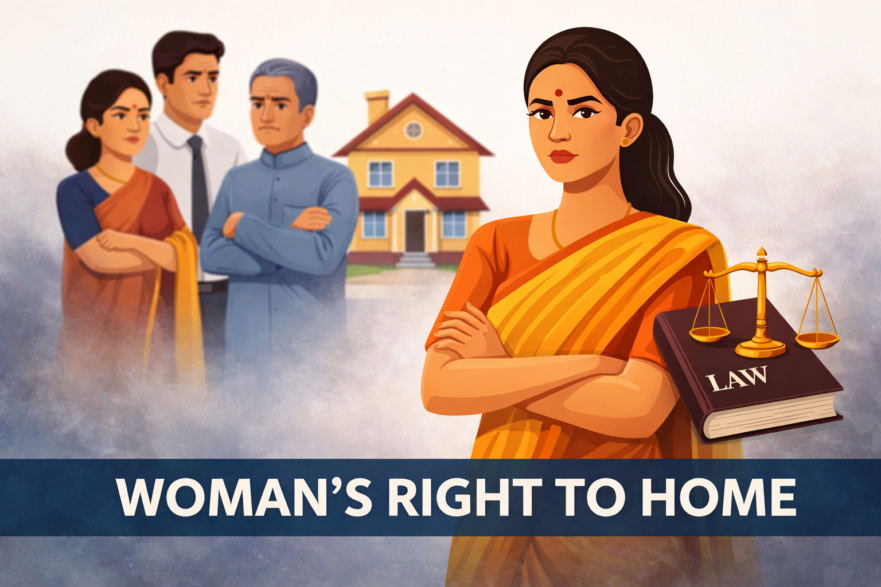
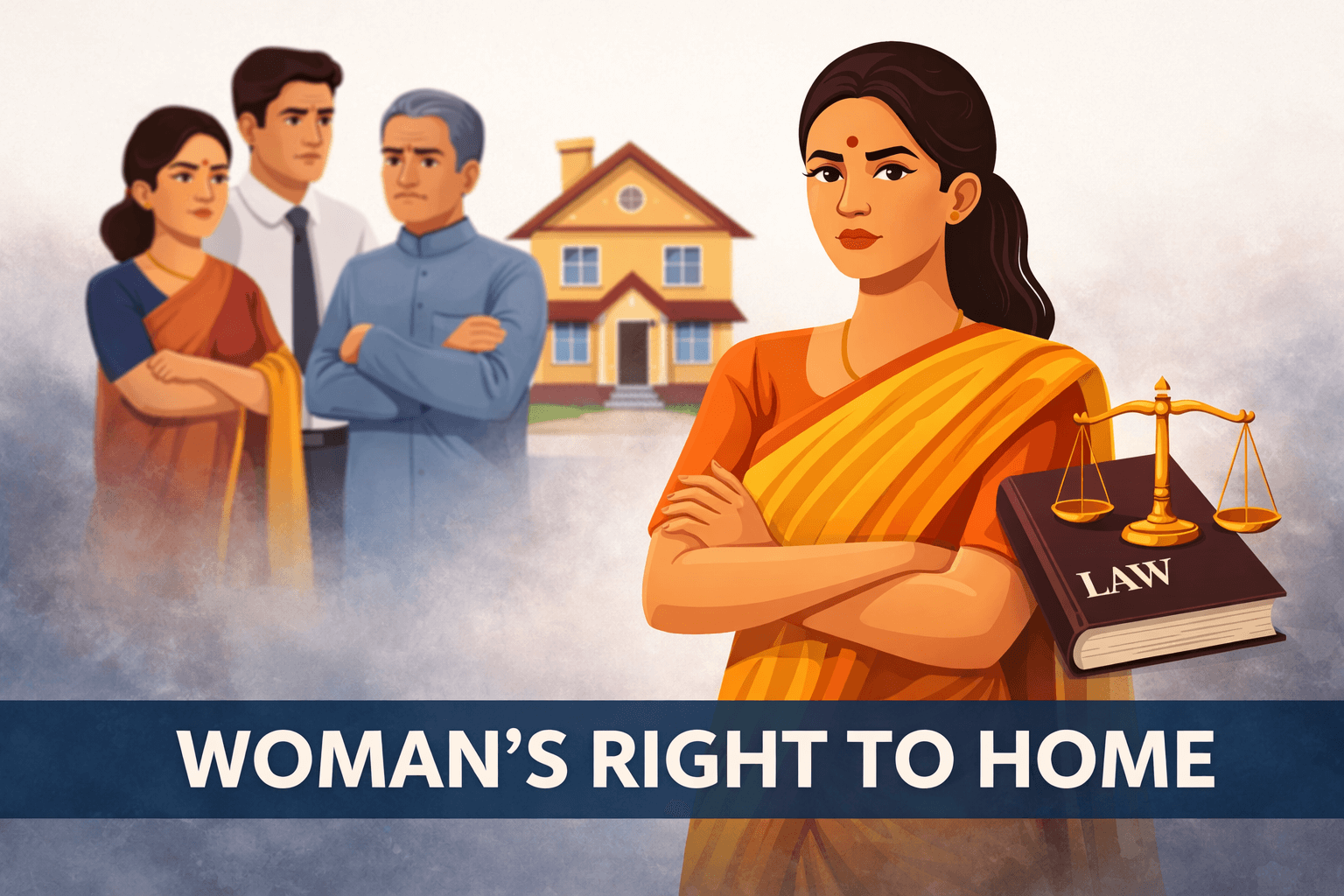
Right of Residence of Women in Matrimonial Home in India
The right of a woman to live in her matrimonial home is one of the most important protections provided under Indian law. Many women face eviction, harassment, and pressure from husbands and in-laws after marriage.
Indian law recognizes that a woman has a legal right to reside in her matrimonial home and cannot be thrown out arbitrarily.
📚 Introduction
After marriage, a woman usually shifts to her husband’s house and starts her matrimonial life there. This house becomes her matrimonial home.
Disputes often arise when marital relations deteriorate and the woman is asked to leave the house.
This article explains the legal position relating to a woman’s right of residence in India.
⚖️ Meaning of Matrimonial Home
Matrimonial home refers to the house where a woman lives with her husband after marriage.
It may be owned by the husband, jointly owned, rented, or belong to in-laws.
The nature of ownership does not automatically take away the woman’s right to reside.
📜 Right of Residence Under Domestic Violence Act, 2005
The Protection of Women from Domestic Violence Act, 2005 provides strong protection to women.
Section 17 of the Act gives every woman in a domestic relationship the right to reside in the shared household.
Key Provisions
- A woman has the right to live in the shared household.
- She cannot be evicted except by legal procedure.
- Ownership of the house is not decisive.
- Even in-laws cannot forcibly remove her.
🏠 Meaning of Shared Household
A shared household means the house where the woman has lived with her husband in a domestic relationship.
It includes houses owned by the husband, rented by him, or belonging to joint family.
The concept is interpreted broadly to protect women.
⚖️ Right of Residence Under Personal Laws
Under Hindu Law
A wife has the right to reside with her husband and claim shelter during marriage.
Under Muslim Law
A Muslim wife has the right to a separate and safe residence.
Under Christian and Other Laws
Similar rights are recognized under matrimonial laws.
⚖️ Can a Woman Be Evicted from Matrimonial Home?
A woman cannot be forcibly evicted from her matrimonial home.
Any eviction must follow due process of law.
Illegal force, threats, or harassment are punishable.
💼 Alternative Accommodation
If living in the shared household is not possible, courts may direct the husband to provide alternative accommodation.
Monetary compensation may also be granted.
📑 Right of Residence After Separation or Dispute
Even after separation, a woman may continue to have residence rights.
Pending divorce or maintenance proceedings, courts often protect shelter rights.
⚖️ Misuse and Safeguards
Courts have recognized that residence rights should not be misused.
False or malicious claims are discouraged.
Each case is examined on its facts.
📝 Importance for Judiciary Exams
Questions on matrimonial home and shared household frequently appear in exams.
Aspirants must remember Section 17 of DV Act and related judgments.
📌 Conclusion
The right of residence protects women from homelessness and exploitation.
Indian law ensures that no woman is deprived of shelter without legal justification.
This right promotes dignity, security, and equality in matrimonial relationships.
📘 Stay Ahead with Delhi Law Academy!
Get access to free monthly current affairs, read our insightful blogs,
and explore free study resources prepared by experts at DLA Jaipur. 🚀
❓ Frequently Asked Questions (FAQs)
1️⃣ Can a wife live in her in-laws’ house? ⚖️
Yes, if it is a shared household, she has the right to reside there.
2️⃣ Can in-laws force a woman to leave the house? 🚫
No, forcible eviction is illegal under the Domestic Violence Act.
3️⃣ Does ownership affect residence rights? 🏠
No, ownership alone does not decide residence rights.
4️⃣ Can residence rights continue after separation? 📜
Yes, courts may protect residence rights during legal proceedings.
5️⃣ What if staying together is unsafe? ⚠️
The court may order alternative accommodation.
6️⃣ Which law protects residence rights? 📚
The Domestic Violence Act, 2005 mainly protects this right.