

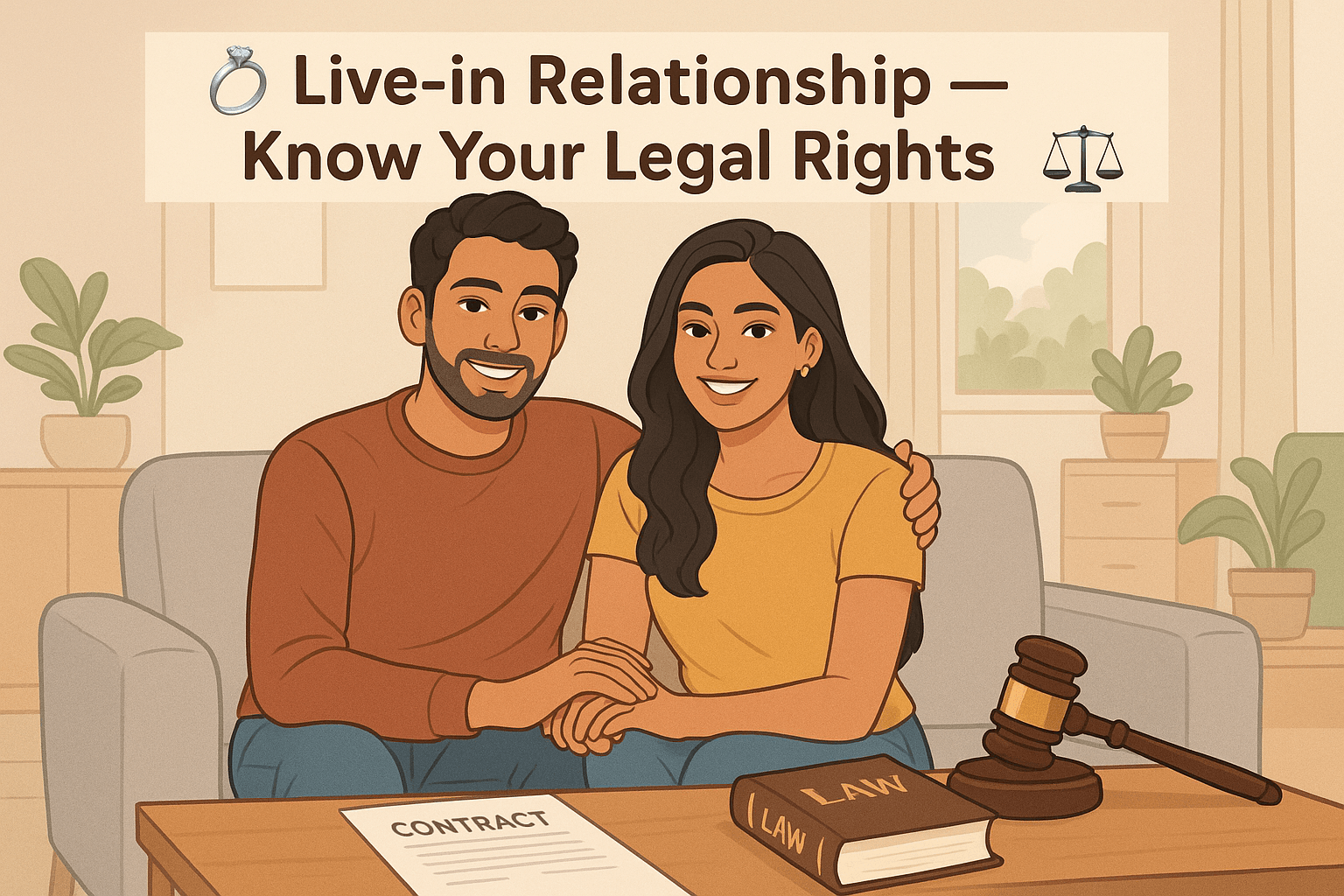
Can Women in Live-In Relationships Use the Domestic Violence Law?
A very common doubt among women is whether the Domestic Violence law applies only to married women,
or whether it also protects women in live-in relationships.
The clear legal position today is that women in certain live-in relationships can seek protection under the Domestic Violence law,
even if they are not legally married.
Is Marriage Mandatory to Use the Domestic Violence Law?
No. Marriage is not mandatory.
The law focuses on protecting women from abuse, not only on marital status.
If a woman is in a relationship that resembles a marriage in real life,
she may seek protection under the Domestic Violence law if she faces abuse.
What Kind of Live-In Relationships Are Covered?
Not every casual relationship is covered.
The law looks at whether the relationship has stability and commitment.
Some important factors considered are:
- 🏠 The couple lived together in a shared household
- ⏳ The relationship was not just temporary or casual
- 🤝 The partners presented themselves as a couple
- 💬 There was emotional and domestic involvement
If these factors exist, the relationship may be treated as a relationship similar to marriage for protection purposes.
What Types of Abuse Are Covered?
The Domestic Violence law protects women from more than just physical violence.
- 👊 Physical abuse
- 🧠 Mental or emotional harassment
- 🗣️ Verbal abuse and humiliation
- 💰 Economic abuse or financial control
- ⚠️ Threats or intimidation
The purpose of the law is to ensure safety, dignity, and protection.
What Relief Can a Woman Seek?
Depending on the facts of the case, a woman may seek:
- 🏠 Protection from further abuse
- 🚫 Orders restraining the partner from harassment
- 🏡 Right to stay in the shared household
- 💸 Financial support in appropriate cases
Relief depends on circumstances and evidence, not merely on the label of the relationship.
What the Law Does NOT Encourage
- ❌ Misuse of the law
- ❌ Claims arising out of purely casual relationships
- ❌ False or exaggerated allegations
Courts carefully examine facts to balance protection with fairness.
Key Takeaways
- ✔ Women in live-in relationships are not left without protection
- ✔ Marriage is not compulsory to seek relief under DV law
- ✔ The relationship must show stability and domestic nature
- ✔ Protection depends on facts and conduct
This article is written by the academic team at Delhi Law Academy, Jaipur, for general legal awareness.
📘 Stay Ahead with Delhi Law Academy!
Get access to free monthly current affairs, read our insightful blogs,
and explore free study resources prepared by experts at DLA Jaipur. 🚀
❓ Frequently Asked Questions
💡 Can an unmarried woman file a domestic violence case?
Yes. Marriage is not mandatory if the relationship is similar to marriage.
👩⚖️ Does DV law apply to all live-in relationships?
No. It applies only where the relationship shows stability, commitment, and domestic nature.
🏠 Can a woman claim the right to stay in the shared house?
In appropriate cases, courts may allow her to stay in the shared household.
⚠️ Is mental harassment covered under domestic violence?
Yes. Mental, emotional, verbal, and economic abuse are also covered.
💰 Can financial support be claimed in live-in cases?
In certain circumstances, financial relief may be granted depending on facts.
🚫 Can the law be misused?
Courts carefully examine evidence to prevent misuse while ensuring genuine protection.