
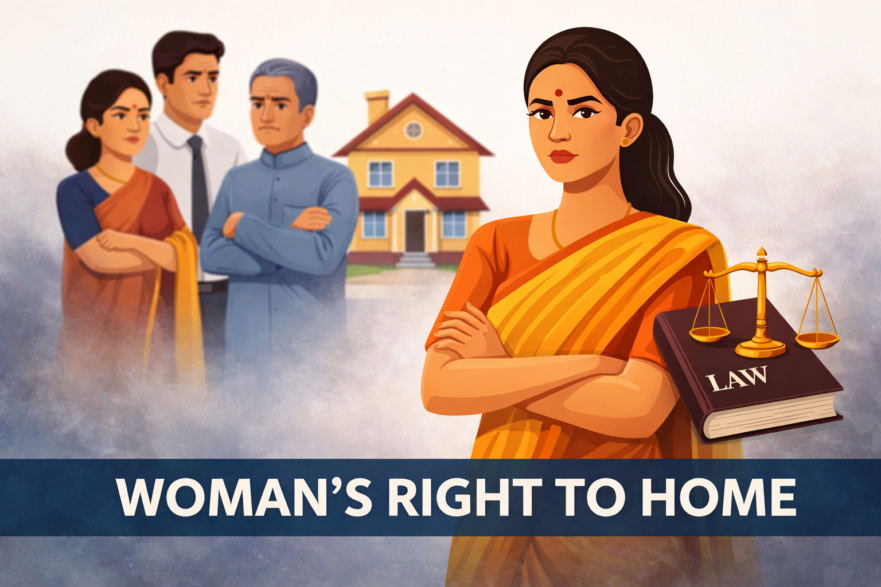
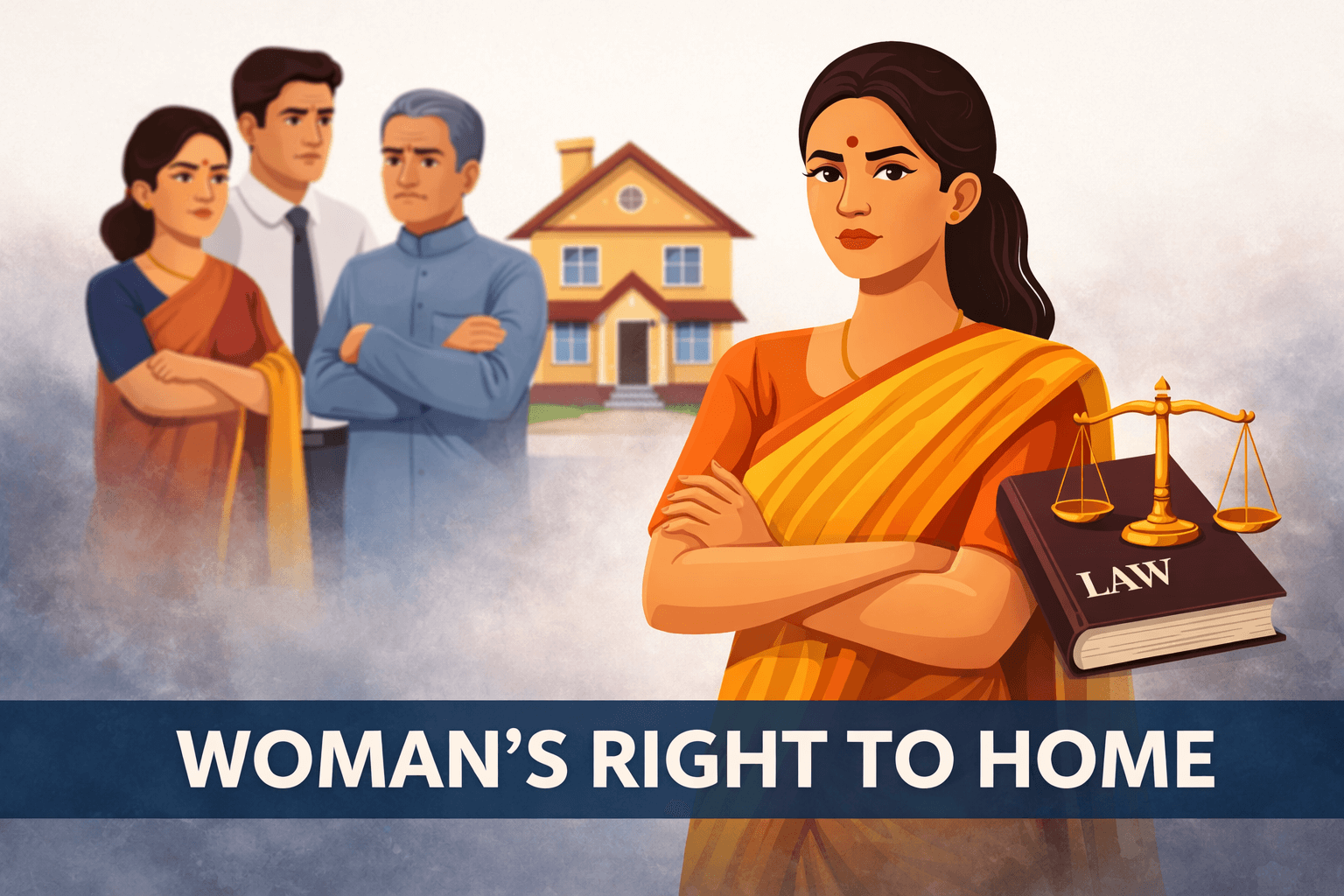
Can In-Laws Evict a Daughter-in-Law from Matrimonial Home?
Disputes between a married woman and her in-laws are common in many Indian households. In several cases, women are threatened with eviction or forcibly removed from their matrimonial home.
This creates confusion about whether in-laws have the legal right to evict a daughter-in-law. Indian law provides strong protection against such actions.
📚 Introduction
After marriage, a woman usually starts living in her husband’s family home. This house becomes her matrimonial home.
When marital relations deteriorate, in-laws may try to remove her from the house.
This article explains the legal position regarding eviction by in-laws.
⚖️ Legal Position Under Domestic Violence Act
The Protection of Women from Domestic Violence Act, 2005 protects a woman’s right to residence.
Section 17 gives every woman the right to reside in the shared household.
This right exists even if the house is owned by in-laws.
Key Protection
- A woman cannot be forcibly evicted.
- Ownership is not decisive.
- Only a court can pass eviction orders.
- Illegal removal is punishable.
🏠 Meaning of Shared Household in In-Laws’ House
If a woman has lived in her in-laws’ house with her husband, it may become a shared household.
In such cases, she has a legal right to reside there.
In-laws cannot deny this right arbitrarily.
⚖️ Supreme Court and High Court Approach
Courts have generally adopted a protective approach towards women.
They have held that women should not be made homeless due to family disputes.
However, each case is decided on its own facts.
📜 Situations Where Eviction May Be Allowed
In limited circumstances, courts may permit eviction.
- When the house was never a shared household
- When the woman never lived there with her husband
- When serious misuse of rights is proved
- When alternative accommodation is provided
Such eviction is possible only through legal process.
⚖️ Right to Alternative Accommodation
If staying in the matrimonial home is not feasible, courts may direct the husband to arrange alternative accommodation.
Financial support may also be ordered.
The objective is to ensure that the woman is not left without shelter.
⚠️ Illegal Eviction and Remedies
If in-laws illegally evict a woman, she can take legal action.
She may approach the Magistrate under the DV Act.
Police protection and residence orders may be granted.
📝 Importance for Judiciary Exams
Questions on eviction by in-laws are common in family law and DV Act topics.
Aspirants must remember Section 17 and the concept of shared household.
📌 Conclusion
In-laws do not have the legal right to forcibly evict a daughter-in-law from the matrimonial home.
Indian law strongly protects women against such actions.
Only courts can decide residence-related disputes after examining facts.
📘 Stay Ahead with Delhi Law Academy!
Get access to free monthly current affairs, read our insightful blogs,
and explore free study resources prepared by experts at DLA Jaipur. 🚀
❓ Frequently Asked Questions (FAQs)
1️⃣ Can in-laws throw a woman out of the house? ⚖️
No, forcible eviction is illegal under the Domestic Violence Act.
2️⃣ Does ownership of house matter? 🏠
No, ownership alone does not decide residence rights.
3️⃣ Can eviction happen through court order? 📜
Yes, only a court can pass a valid eviction order.
4️⃣ What if the woman never lived there? 🚫
Then the house may not be treated as a shared household.
5️⃣ Can courts order alternative accommodation? 💼
Yes, courts may direct the husband to provide another residence.
6️⃣ Where can a woman complain? 📚
She can approach the Magistrate under the Domestic Violence Act.