
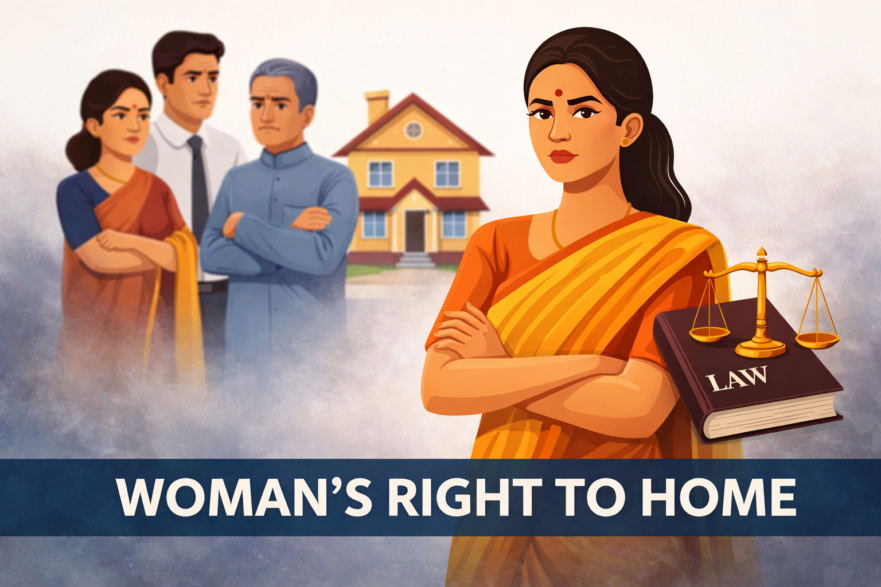
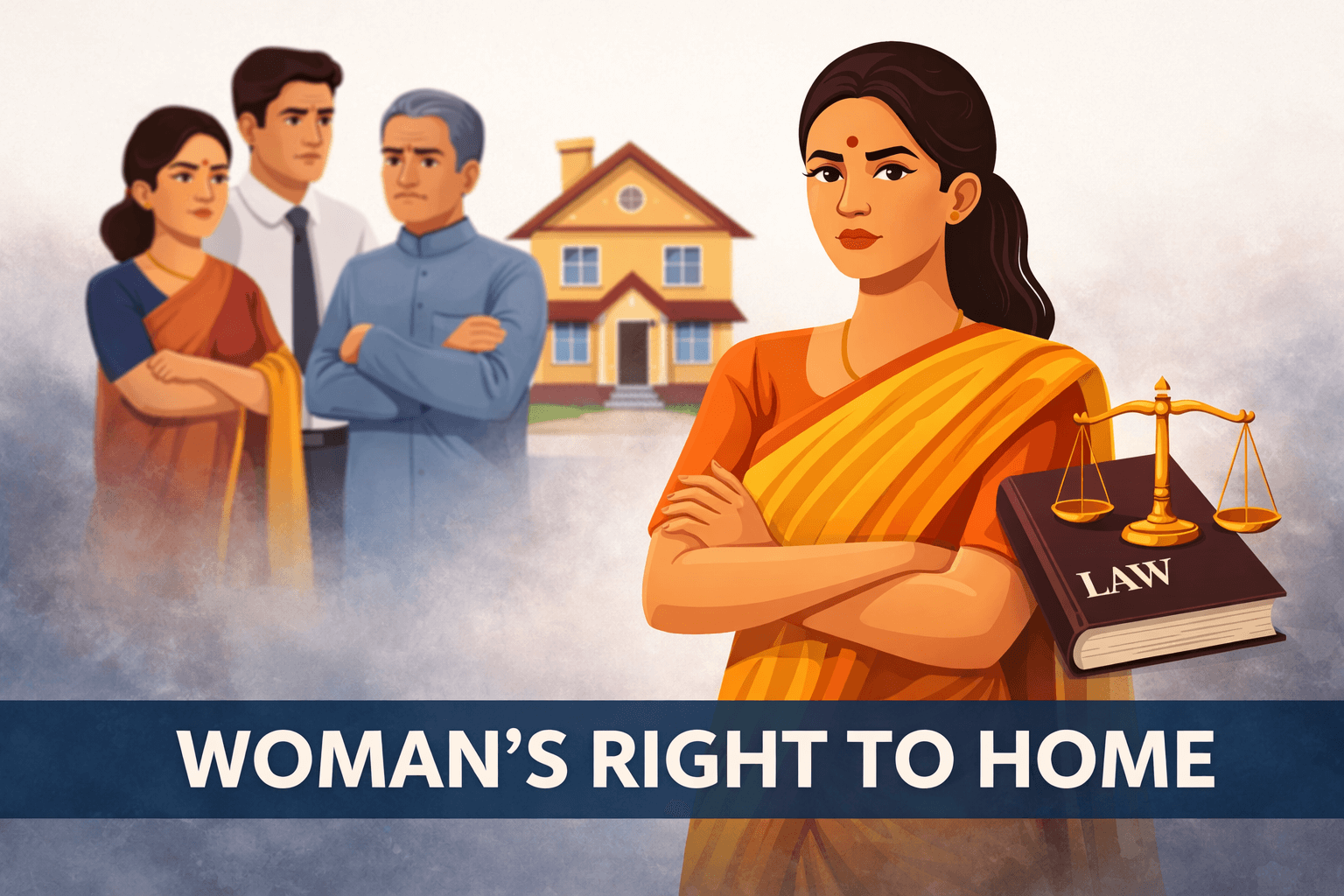
Can Husband Force Wife to Leave Matrimonial Home in India?
In many marital disputes, husbands try to pressure their wives to leave the matrimonial home. This may be done through threats, harassment, emotional pressure, or physical force.
Indian law clearly protects women against such actions and provides strong legal remedies.
📚 Introduction
After marriage, a woman has the right to live with dignity and security in her matrimonial home.
Forcing her to leave without legal justification violates her fundamental and statutory rights.
This article explains whether a husband can legally remove his wife from the matrimonial home.
⚖️ Legal Position Under Domestic Violence Act
The Protection of Women from Domestic Violence Act, 2005 safeguards a woman’s right to residence.
Section 17 gives every woman the right to live in the shared household.
A husband cannot take away this right arbitrarily.
Key Protections
- No forcible eviction is allowed.
- No threats or pressure are permitted.
- Only court orders are valid.
- Due process must be followed.
🏠 Meaning of Shared Household
If the woman has lived with her husband in a particular house, it becomes a shared household.
She has a legal right to reside there regardless of ownership.
⚖️ Psychological and Economic Pressure
Forcing a wife to leave may also take the form of emotional or financial abuse.
Withholding money, food, or basic necessities amounts to domestic violence.
Such conduct is punishable under law.
📜 Right to Alternative Accommodation
If cohabitation becomes impossible, courts may direct the husband to arrange separate accommodation.
This ensures that the woman is not rendered homeless.
⚖️ Remedies Available to Wife
If a husband tries to force his wife out, she may seek legal protection.
- Residence order under DV Act
- Protection order
- Maintenance under Section 125 CrPC
- Police assistance
⚠️ Illegal Eviction and Consequences
Illegal eviction may attract criminal and civil liability.
Courts take a strict view of such conduct.
Husbands may face legal consequences for harassment and abuse.
📝 Importance for Judiciary Exams
Questions on residence rights and domestic violence are frequently asked.
Aspirants must understand statutory provisions and remedies.
📌 Conclusion
A husband has no legal right to forcibly remove his wife from the matrimonial home.
Indian law protects women against physical, emotional, and economic abuse.
Courts ensure that women’s dignity and shelter are safeguarded.
📘 Stay Ahead with Delhi Law Academy!
Get access to free monthly current affairs, read our insightful blogs,
and explore free study resources prepared by experts at DLA Jaipur. 🚀
❓ Frequently Asked Questions (FAQs)
1️⃣ Can a husband legally throw his wife out? ⚖️
No, forcible eviction is illegal under Indian law.
2️⃣ What if the house is in husband’s name? 🏠
Ownership does not remove the wife’s residence rights.
3️⃣ Can police help in such cases? 🚓
Yes, police assistance may be sought under court orders.
4️⃣ Is emotional pressure also illegal? 📜
Yes, emotional and economic abuse is punishable.
5️⃣ Can court order separate house? 💼
Yes, courts may order alternative accommodation.
6️⃣ Which law mainly protects wife’s residence? 📚
The Domestic Violence Act, 2005 provides major protection.