
TOPIC: FUNDAMENTAL DIFFERENCE BETWEEN SECTION 154 CrPC AND SECTION 173 BNSS
SUPREME COURT JUDGMENT
IMRAN PRATAPGADHI v. STATE OF GUJARAT [2025 INSC 410]
Delhi Law Academy Jaipur presents below for aspirants of Rajasthan Judicial Service (RJS), DJS, PCS (J) and other Judicial Services throughout India a very important judgment of the Supreme Court of India, delivered on 28 March, 2025.
Presented below: Summarized version [by Delhi Law Academy Jaipur] of the Supreme Court Judgment in the case of Imran Pratapgadhi v. State of Gujarat delivered on 28 March, 2025.
[Original language of the judgment has been maintained; it has not been disturbed or replaced]
THE CORE DIFFERENCE
Sub-Section (3) of Section 173 of the BNSS is an exception to sub-Section (1) of Section 173.
In the category of cases covered by sub-Section (3), a police officer is empowered to make a preliminary inquiry to ascertain whether a prima facie case is made out for proceeding in the matter even if the information received discloses commission of any cognizable offence
IMRAN PRATAPGADHI v. STATE OF GUJARAT
[2025 INSC 410]
J U D G M E N T
2. The issue in this appeal revolves around a poem recited in the background of a video clip. The video clip was posted on social media by the appellant. The text of the poem has been reproduced in paragraph 13 of the impugned judgment…
4. The appellant filed a petition under Section 528 of the Bharatiya Nagarik Suraksha Sanhita read with Article 226 of the Constitution of India, praying for quashing the said FIR.
5. By the impugned judgment and order, the learned Single Judge rejected the petition by holding that as the investigation is at a very nascent stage, interference cannot be made in view of the decision of this Court in the case of Neeharika Infrastructure Pvt. Ltd. v State of Maharashtra…
22. Sub-Section (1) of Section 173 of BNSS is substantially the same as Sub-Section (1) of Section 154 of the Code of Criminal Procedure, 1973. Therefore, the law laid down by this Court in the case of Lalita Kumari v. Govt. of U.P. on Section 154 of the CrPC will be relevant.
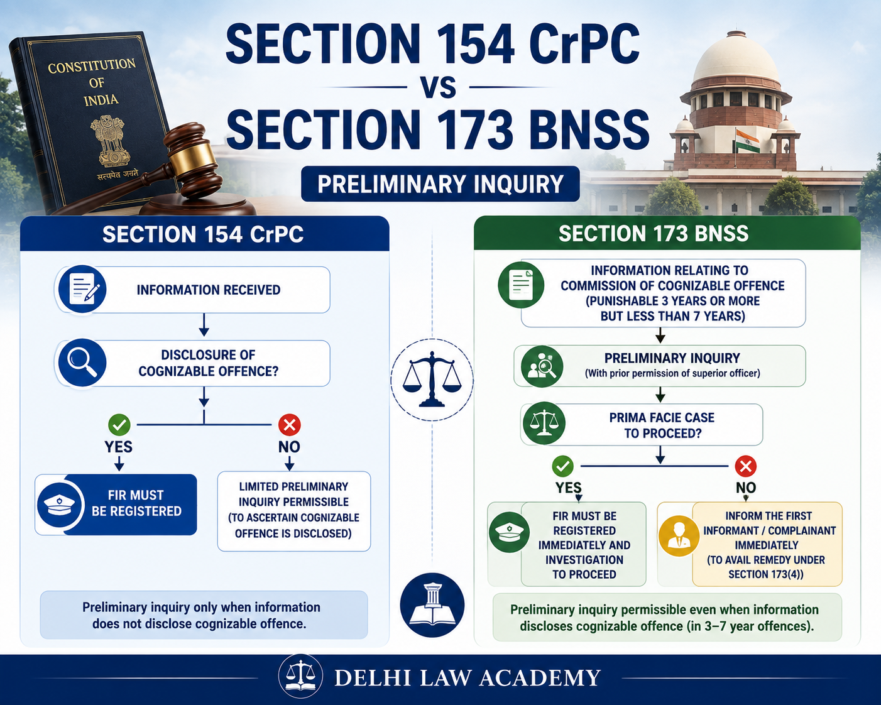
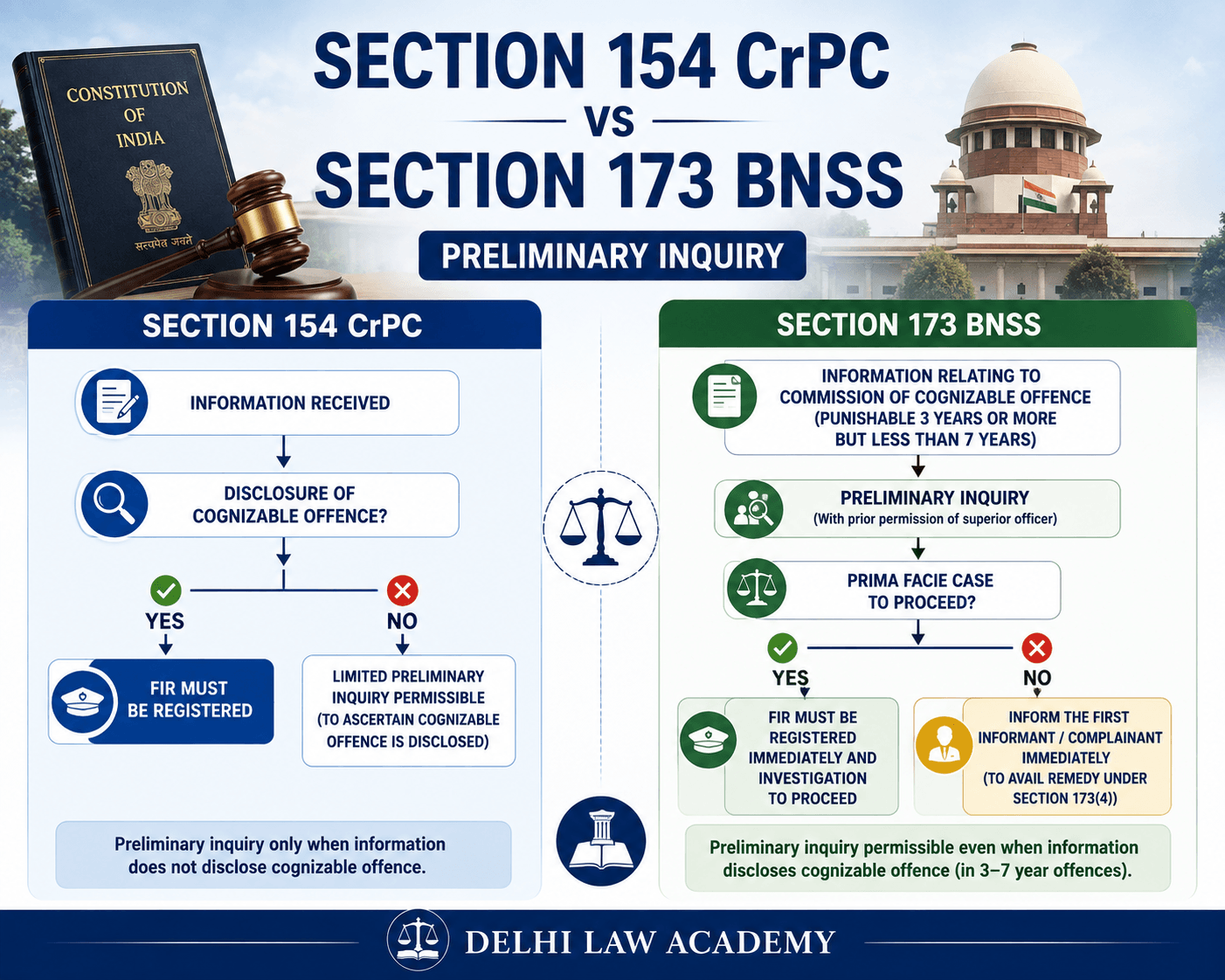
23. Section 154 of the CrPC does not provide for making any preliminary inquiry. However, as held in the case of Lalita Kumari, a preliminary inquiry is permissible if the information received does not disclose a cognizable offence and indicates the necessity for an inquiry. A preliminary inquiry must be conducted only to ascertain whether a cognizable offence is disclosed. However, sub-Section (3) of Section 173 of the BNSS makes a significant departure from Section 154 of the CrPC. It provides that when information relating to the commission of a cognizable offence which is made punishable for 3 years or more but less than 7 years is received by an officer-in-charge of a police station, with the prior permission of a superior officer as mentioned therein*, the police officer is empowered to conduct a preliminary inquiry to ascertain whether there exists a prima facie case for proceeding in the matter*. However, under Section 154 of the CrPC, as held in the case of Lalita Kumari, only a limited preliminary inquiry is permissible to ascertain whether the information received discloses a cognizable offence. Moreover, a preliminary inquiry can be made under the CrPC only if the information does not disclose the commission of a cognizable offence but indicates the necessity for an inquiry.
Sub-Section (3) of Section 173 of the BNSS is an exception to sub-Section (1) of Section 173. In the category of cases covered by sub-Section (3), a police officer is empowered to make a preliminary inquiry to ascertain whether a prima facie case is made out for proceeding in the matter even if the information received discloses commission of any cognizable offence. That is very apparent as sub-Section (3) of Section 173 refers explicitly to receiving information relating to the commission of a cognizable offence. Therefore, in a case where sub-Section (3) of Section 173 is applicable, even if the information pertaining to the commission of any cognizable offence is received, an inquiry can be conducted to ascertain whether a prima facie case exists for proceeding in the matter. The intention appears to be to prevent the registration of FIRs in frivolous cases where punishment is up to 7 years, even if the information discloses the commission of the cognizable offence. However, under Section 154 of the CrPC, the inquiry permitted by paragraph 120.2 of the decision in the case of Lalita Kumari is limited only to ascertain whether the cognizable offence is disclosed.
24. Under sub-Section (3) of Section 173 of the BNSS, after holding a preliminary inquiry, if the officer comes to a conclusion that a prima facie case exists to proceed, he should immediately register an FIR and proceed to investigate. But, if he is of the view that a prima facie case is not made out to proceed, he should immediately inform the first informant/complainant so that he can avail a remedy under sub-Section (4) of Section 173.
25. Before we go into the applicability of sub-Section (3) of Section 173 of the BNSS to the facts of the case, we must deal with sub-Section (1) of Section 173. Take a case where a person approaches an officer-in-charge of a police station either personally or by electronic communication and alleges that he has seen ‘A’ assaulting ‘X’ with a stick. If the injury caused is simple, it will be an offence punishable under Section 115 (2) of the BNS. As per the first Schedule of the BNSS, it is a non-cognizable offence. Therefore, based on such information, FIR cannot be registered. If grievous hurt is caused, it will be an offence punishable under Section 117 (2) of the BNS, which is a cognizable offence. Therefore, the allegations made in the information furnished to an officer-in-charge of a police station must be examined by the officer only with a view to ascertain whether a cognizable offence is made out. Taking the information as correct, the officer has to determine whether it makes out a case of the commission of a cognizable offence. If the allegation makes out a case of a cognizable offence, unless the offence falls in sub-Section (3) of Section 173, it is mandatory to register FIR.
28. Sub-Section (3) of Section 173 of the BNSS confers a discretion on the officer receiving information relating to the commission of a cognizable offence to conduct a preliminary inquiry to ascertain whether a prima facie case exists to proceed. This option is available when the offence alleged is made punishable for 3 years or more but less than 7 years.
42. Following is the summary of our conclusions:
(i) Sub-Section (3) of Section 173 of the BNSS makes a significant departure from Section 154 of CrPC. It provides that when information relating to the commission of a cognizable offence which is made punishable for 3 years or more but less than 7 years is received by an officer-in-charge of a police station, with the prior permission of a superior officer as mentioned therein, the police officer is empowered to conduct a preliminary inquiry to ascertain whether there exists a prima facie case for proceeding in the matter. However, under Section 154 of the CrPC, as held in the case of Lalita Kumari, only a limited preliminary inquiry is permissible to ascertain whether the information received discloses a cognizable offence. Moreover, a preliminary inquiry can be made under the CrPC only if the information does not disclose the commission of a cognizable offence but indicates the necessity for an inquiry. Sub-Section (3) of Section 173 of the BNSS is an exception to sub-Section (1) of Section 173. In the category of cases covered by sub-Section (3), a police officer is empowered to make a preliminary inquiry to ascertain whether a prima facie case is made out for proceeding in the matter even if the information received discloses commission of any cognizable offence.
(ii) Under sub-Section (3) of Section 173 of the BNSS, after holding a preliminary inquiry, if the officer comes to a conclusion that a prima facie case exists to proceed, he should immediately register an FIR and proceed to investigate. But, if he is of the view that a prima facie case is not made out to proceed, he should immediately inform the first informant/complainant so that he can avail a remedy under sub-Section (4) of Section 173.
(iii) In case of the offence punishable under Section 196 of the BNS to decide whether the words, either spoken or written or by sign or by visible representations or through electronic communication or otherwise, lead to the consequences provided in the Section, the police officer to whom information is furnished will have to read or hear the words written or spoken, and by taking the same as correct, decide whether an offence under Section 196 is made out. Reading of written words, or hearing spoken words will be necessary to determine whether the contents make out a case of the commission of a cognizable offence. The same is the case with offences punishable under Sections 197, 299 and 302 of BNS. Therefore, to ascertain whether the information received by an officer-in-charge of the police station makes out a cognizable offence, the officer must consider the meaning of the spoken or written words. This act on the part of the police officer will not amount to making a preliminary inquiry which is not permissible under sub-Section (1) of Section 173.
************************************
📘 Free Study Material for Judiciary Aspirants!
Download our FREE study material prepared by Delhi Law Academy’s expert faculty.
Contact us
📍 Delhi Law Academy – Jaipur Branch
6C, Tower 2, Coaching Hub, Pratap Nagar, Jaipur – 302033
📞 Phone:
+91 9911916552
+91 8447285606
✉️ Email:
contactus@delhilawacademy.com